
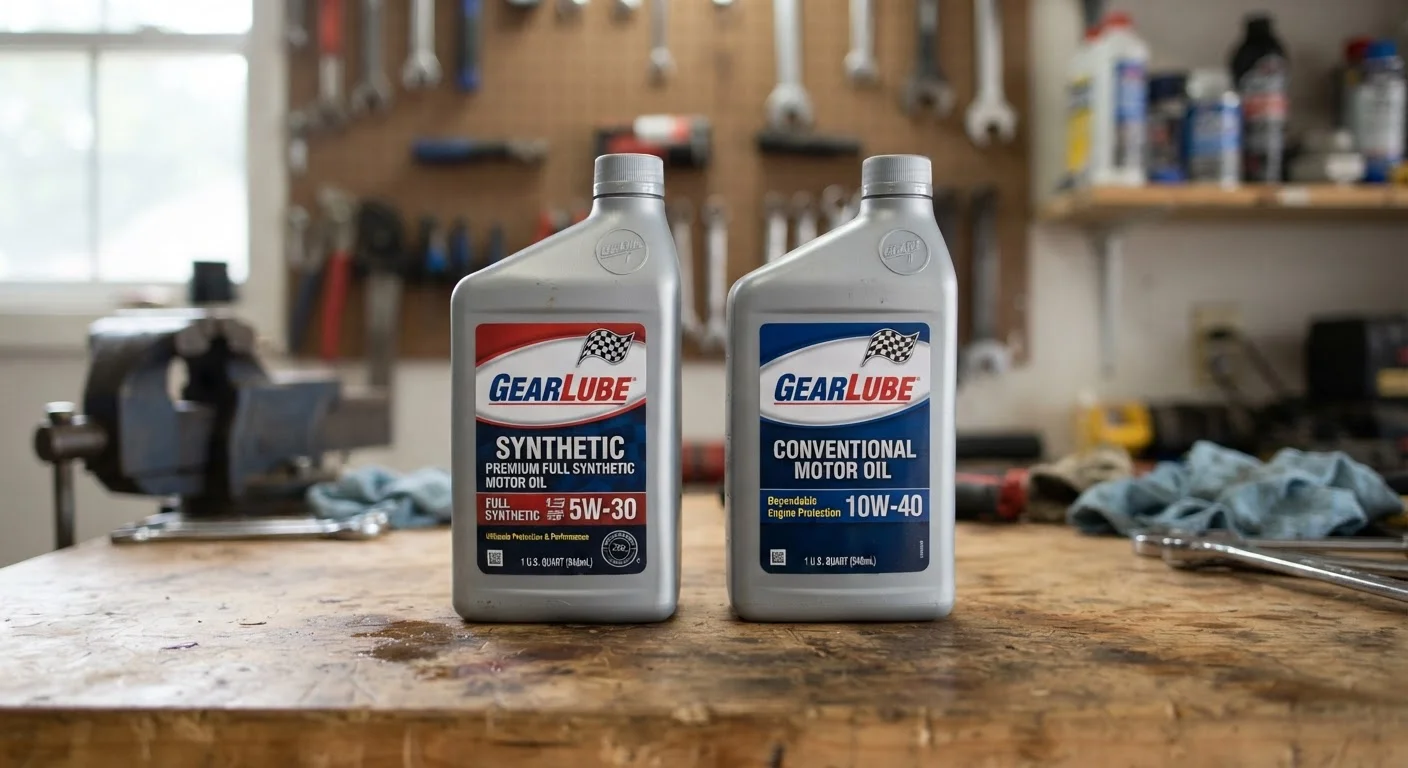
What Makes These Two Oils Different
At their core, synthetic and conventional motor oils do the same job: they lubricate engine components, reduce friction, carry away heat, and help keep internal parts clean. Where they diverge is in origin and consistency.
Conventional motor oil is derived from crude petroleum that is extracted, refined, and blended with additive packages. Because crude is a natural substance, its molecular structure is inherently variable - refining removes many impurities, but the resulting oil still contains molecules of differing sizes and shapes.
Synthetic motor oil, by contrast, is chemically engineered. Manufacturers start with a base stock - sometimes derived from petroleum, sometimes from other organic compounds - and build uniform molecular chains from the ground up. The result is a more consistent product with fewer contaminants and more predictable behavior under a wide range of conditions.
A third category, synthetic blend, mixes both types to offer a middle ground in performance and cost. Many mainstream vehicles use blends as a factory-recommended oil.
| Criterion | Synthetic Motor Oil | Conventional Motor Oil |
|---|---|---|
| Origin | Chemically engineered base stock | Refined from crude petroleum |
| Molecular consistency | Highly uniform | Naturally variable |
| Typical change interval | 7,500-10,000+ miles | 3,000-5,000 miles |
| Cold-weather flow | Flows faster at startup | Thickens more in cold temps |
| Heat resistance | Higher thermal stability | Breaks down faster under heat |
| Cost per change | Generally higher | Generally lower |
| Best engine fit | Modern, turbocharged, performance | Older, simpler, naturally aspirated |
Performance, Longevity, and Real-World Conditions
For most everyday drivers, the practical differences show up in three areas: how long the oil lasts, how it performs in temperature extremes, and how well it protects the engine during cold starts.
Change intervals: Conventional oil is typically changed every 3,000 to 5,000 miles under standard driving conditions. Synthetic oil can often go 7,500 to 10,000 miles or more between changes - some manufacturers specify even longer intervals. That said, your owner manual sets the authoritative schedule for your specific engine. For more context on how manufacturers set these intervals, see our guide to oil grades and change intervals.
Cold-weather starts: Oil thickens in cold temperatures. Synthetic oil's uniform molecular structure allows it to flow more quickly at startup, reducing the brief period of higher wear that occurs before oil fully circulates - a real advantage in northern climates.
Heat stability: High engine temperatures cause oil to oxidize and break down over time. Synthetics generally resist thermal breakdown longer, which matters especially for turbocharged engines where oil temperatures spike more than in naturally aspirated designs.
7,500+
Miles between synthetic oil changes (typical)
Many vehicle manufacturers now specify 7,500- to 10,000-mile intervals for full synthetic oil, though exact schedules vary by engine and driving conditions.
~30%
Engine wear occurs at cold startup
Industry engineering data has long suggested a disproportionate share of engine wear happens during the first moments after a cold start, before oil fully circulates - an area where synthetics show measurable advantages.
Which Oil Is Right for Your Driving Situation?
The honest answer is: check your owner manual first. Manufacturers test their engines with specific oil types and viscosities, and that guidance takes priority over general advice.
That said, some patterns are fairly consistent:
- Newer vehicles (roughly 2010 and later) often specify synthetic or synthetic blend from the factory.
- Turbocharged or high-performance engines almost universally benefit from full synthetic due to the extra heat they generate.
- Older vehicles with simple, naturally aspirated engines may run perfectly well on conventional oil, particularly if that's what they've always used.
- High-mileage vehicles (typically over 75,000 miles) can use either type, though some high-mileage-specific formulations - both synthetic and conventional - include seal conditioners to address minor leaks that develop with age.
Cost is a real consideration too. Synthetic oil costs more per quart, but longer change intervals can offset some of that difference over time. Running the numbers for your annual mileage is a reasonable way to compare total yearly costs rather than just the price per change.
Can You Switch From Conventional to Synthetic?
For most modern vehicles, switching from conventional to full synthetic is straightforward and generally safe. The concern that switching causes leaks is largely a myth for engines in good condition - modern synthetic formulas are compatible with standard engine seals. However, if your engine already has existing oil leaks or very high mileage, consult a mechanic before making the switch, as the change could affect how minor leaks behave.
This article is for general informational purposes only. Always consult your vehicle's owner manual and, when in doubt, speak with a qualified mechanic before changing the oil type used in your engine.