
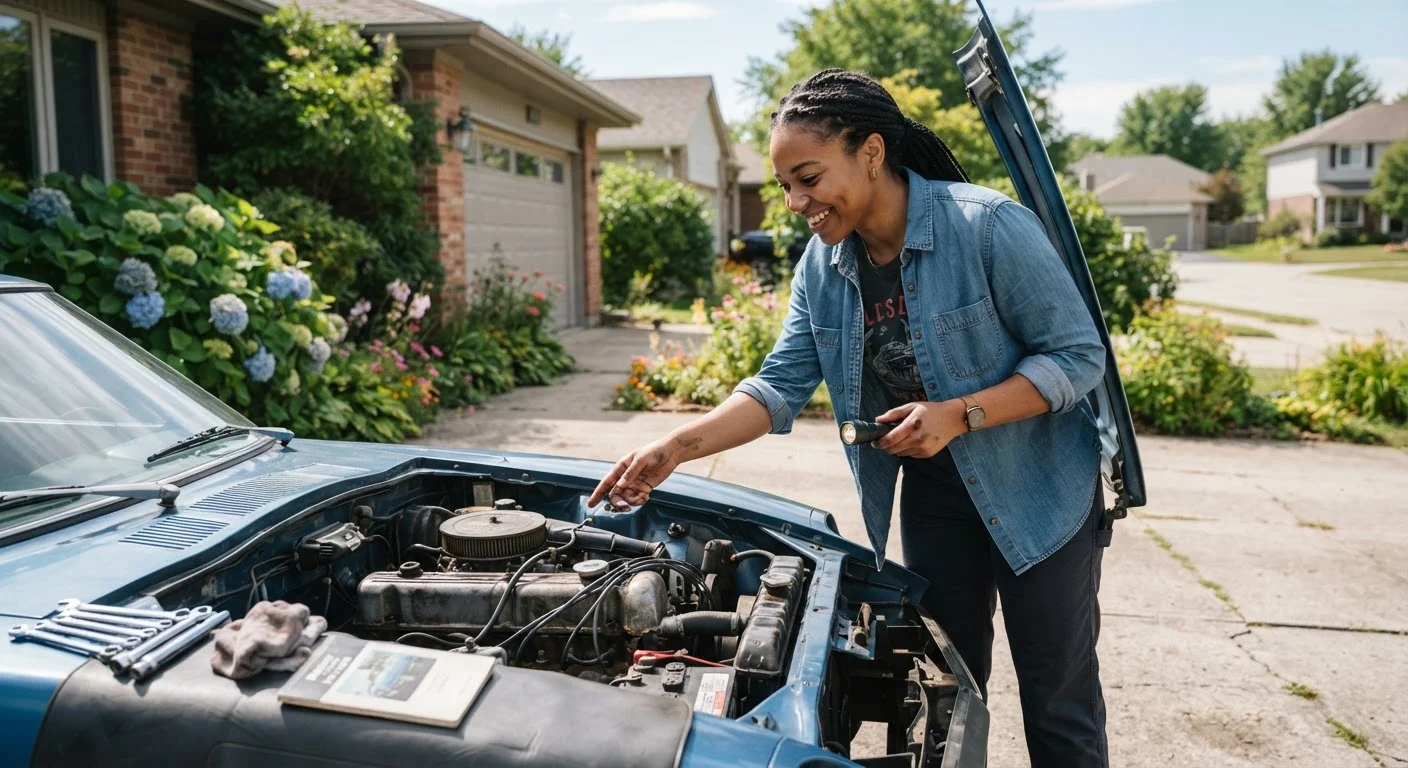
Why Car Maintenance Matters from Day One
A car is one of the most complex and expensive items most people own - and unlike a phone or appliance, neglecting it can compromise your safety, not just your budget. For new drivers, maintenance can feel intimidating, but the fundamentals are genuinely learnable and don't require specialist tools or knowledge to get started.
The core principle is simple: small, consistent attention prevents large, expensive problems. As explored in our article on how skipping minor maintenance leads to bigger problems, the issues that sideline cars most often start as modest, fixable faults that went unnoticed. Building awareness early means you catch them while they're still inexpensive to address.
Dipstick
A long thin rod inserted into the engine that lets you measure the current oil level without opening any sealed components.
PSI
Pounds per square inch - the unit used to measure tyre inflation pressure in the US.
Tread depth
The measurement of the grooves on a tyre's surface; deeper grooves provide better grip, especially in wet conditions.
Brake caliper
A clamp-like device that squeezes brake pads against the rotor to slow the wheel when you press the brake pedal.
Service interval
The recommended mileage or time period between scheduled maintenance tasks, as specified by the vehicle manufacturer.
Owner's manual
The official booklet provided with your vehicle that contains all manufacturer-recommended maintenance schedules, fluid specifications, and safety information.
The Essential Fluids Every Driver Should Know
Your car runs on a carefully balanced set of fluids, and monitoring them is the most accessible form of maintenance available to any driver. The main ones to understand are:
- Engine oil: Lubricates moving engine parts and reduces heat from friction. Check the level with the dipstick; the colour should be amber to dark brown, not black or milky.
- Coolant (antifreeze): Regulates engine temperature and prevents freezing or overheating. Check the reservoir level when the engine is cold - never open the cap on a hot engine.
- Brake fluid: Transmits the pressure from your foot to the brake calipers. A low or discoloured level warrants prompt professional attention.
- Windshield washer fluid: The only fluid you can top up freely without mechanical concern - but a dry reservoir in poor visibility is a genuine safety issue.
For a complete walkthrough of each fluid, where to find it, and how to read levels safely, see our companion guide on what each car fluid does and how to check it.
Check Fluids When the Engine Is Cold
Most fluid checks are safest and most accurate when the engine has been off for at least 30 minutes. Hot engines can give misleading oil readings and opening a pressurised coolant cap while warm can cause burns. Build the habit of checking fluids at the start of a day, before you drive.
Tyres, Brakes, and Filters: Your Safety Checklist
Beyond fluids, three additional systems demand regular attention from every driver:
Tyres
Tyre pressure should be checked at least monthly and always before a long drive. Under-inflated tyres wear unevenly, reduce fuel efficiency, and increase stopping distances. Your vehicle's recommended pressure (measured in PSI) is listed on a sticker inside the driver's door jamb - not on the tyre sidewall. For a detailed ongoing checklist covering inflation, tread depth, and rotation schedules, refer to our guide on tyre pressure, tread depth, and rotation.
Brakes
Squealing, grinding, or a spongy brake pedal are all signals that your braking system needs professional inspection. Brake pads generally need replacing every 25,000-70,000 miles, though this varies considerably by driving style and conditions. This is not a task for DIY unless you have specific training - brake failure has direct safety consequences.
Air Filter
A clogged engine air filter restricts airflow, reduces performance, and can affect fuel economy. Inspect it annually or every 15,000-30,000 miles. Replacement is typically simple and inexpensive when done at a service appointment.
Never Ignore Brake Warning Signs
Grinding or squealing brakes, a vibrating pedal, or a vehicle pulling to one side when braking are all reasons to stop driving and seek a professional inspection as soon as safely possible. Delaying brake repairs creates a direct risk of accident. This is not maintenance you should defer.
Building a Simple, Sustainable Service Routine
The most effective maintenance habit is a written schedule you actually follow. Start with your owner's manual - it contains the manufacturer's recommended service intervals for every system on your vehicle. Use those intervals as your foundation, then layer in your own monthly checks.
A practical rhythm for most drivers looks like this:
- Monthly: Check tyre pressure, engine oil level, coolant level, and washer fluid. Do a quick visual walk-around for anything unusual.
- Every 6 months or per manual guidance: Oil and filter change, tyre rotation, brake inspection.
- Annually: Air filter, cabin filter, battery terminals, wiper blades, and any items flagged by your mechanic.
Keep a simple maintenance log - a notebook in the glovebox or a note on your phone works fine. Record the date, mileage, and what was done. This helps you track intervals accurately and provides useful documentation if you ever sell the vehicle.
If you're heading out on a longer drive, our checklist on everything you need before leaving the driveway covers both safety gear and vehicle readiness in one place.
Your Owner's Manual Overrides General Advice
General maintenance guidelines are a useful starting point, but your vehicle's owner's manual is the authoritative source for your specific make, model, and engine. Intervals for oil changes, filter replacements, and other tasks vary between vehicles. When in doubt, follow the manual - or ask your mechanic.
This article provides general car maintenance information for educational purposes only. Always consult a qualified mechanic before performing repairs or if you notice any change in your vehicle's performance or warning lights. Refer to your owner's manual for guidance specific to your vehicle.