
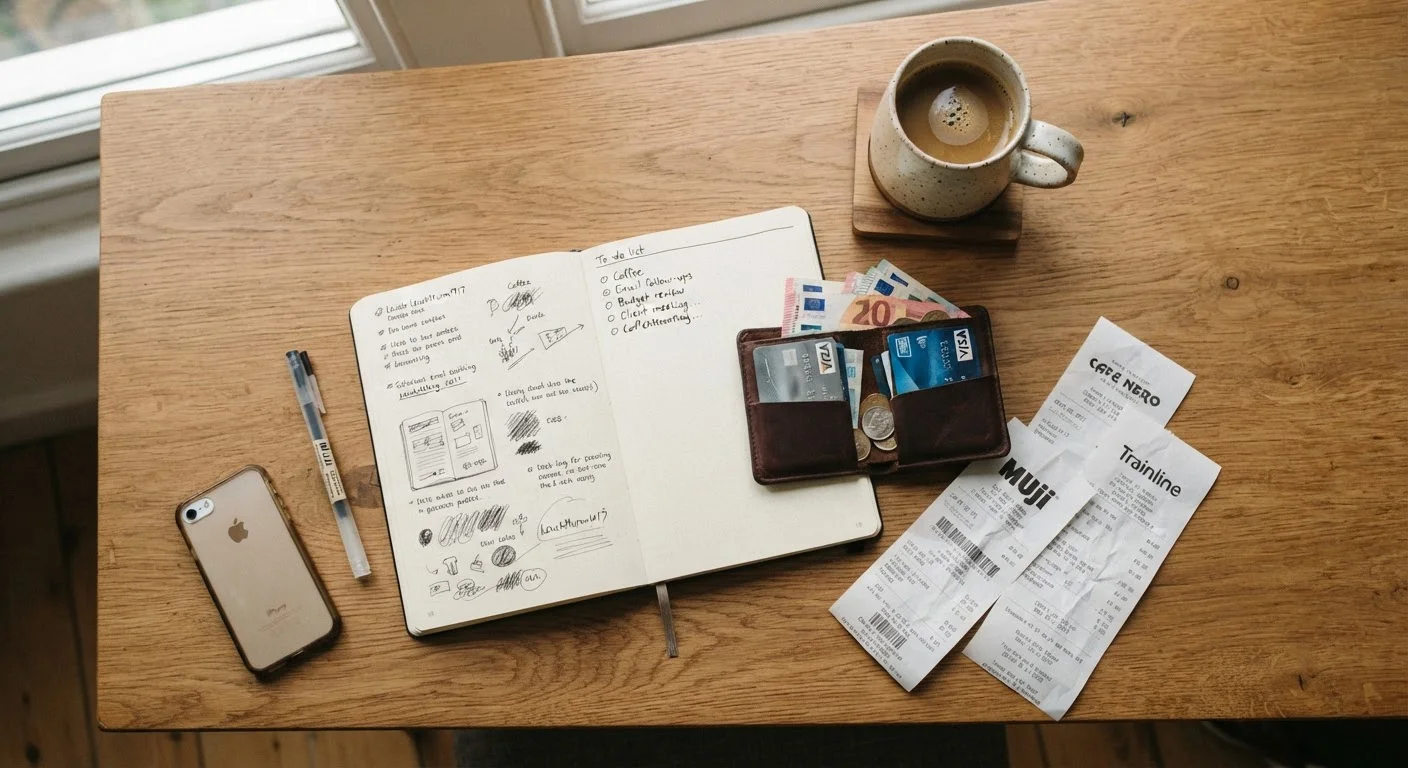
The Gap Between What You Think You Spend and What You Actually Do
Ask most people to estimate their monthly spending on food, coffee, or entertainment, and they'll give a number. Ask them to check their bank statements afterward, and the actual figure is almost always higher - often significantly. Research in behavioral economics consistently shows that people underestimate discretionary spending when relying on memory alone. The problem isn't carelessness; it's that most everyday purchases are small enough to feel forgettable in the moment.
A $4 coffee seems trivial. So does a $12 takeout lunch, a $2.99 app renewal, or a $6 parking fee. But these purchases compound daily across dozens of categories, and that's where the gap lives. Understanding everyday spending isn't about guilt - it's about getting an accurate picture so your choices are genuinely informed.
~30-40%
How much people underestimate their daily spending
Behavioral economics research consistently shows significant recall gaps between estimated and actual discretionary spending.
$200-$300
Estimated average monthly subscription spend per household
Multiple consumer surveys suggest many US households carry far more active subscriptions than they actively use or recall.
2 weeks
Time needed to reveal your core spending patterns
Financial educators generally recommend at least two weeks of transaction tracking to surface meaningful behavioral patterns.
The Most Common Spending Categories People Overlook
Fixed costs - rent, utilities, car payments - are easy to account for because they appear on a schedule. The harder categories to track are the ones that vary and recur unpredictably:
- Food and drink: Grocery overruns, takeout frequency, and café stops are consistently the most underestimated category for most households.
- Subscriptions and digital services: These auto-renew quietly. Many people carry active subscriptions to services they haven't used in months. See a practical checklist for auditing hidden costs before your next pay cycle.
- Convenience spending: Delivery fees, express shipping, on-demand services, and parking often get mentally filed as one-offs - but they recur constantly.
- Social and leisure: Drinks with friends, casual gifts, event tickets, and hobby supplies tend to get mentally filed under a vague 'fun' category without specific tallying.
None of these are inherently bad spending - but they need to be visible before you can decide whether they reflect your actual priorities. Common beliefs about saving can also muddy how people interpret this kind of data.
Spending Patterns Vary Widely by Lifestyle
There's no universal breakdown of 'correct' spending ratios that applies to every person. Factors like housing costs in your area, household size, transportation needs, and health expenses all shift what a reasonable category split looks like. Use your own data as the baseline - comparisons to national averages are context, not targets.
How to Trace Your Spending Without Overhauling Your Life
You don't need a sophisticated system to understand your spending. The core practice is straightforward: capture transactions, categorize them, and review regularly.
- Pull your last 30 days of bank and card statements. Include every account you use, including payment apps. If you use cash regularly, estimate those separately.
- Group transactions into broad categories. Aim for 6-8 buckets: food, transport, subscriptions, entertainment, personal care, household, health, and miscellaneous. Avoid too many subcategories early on - clarity beats precision at this stage.
- Identify the surprises. Look for categories where your total is notably higher than you expected. Those gaps are where your attention belongs.
- Set a weekly 10-minute review habit. The most effective habit isn't a monthly audit - it's a brief weekly check-in that keeps you anchored to what's actually happening.
Start With One Category, Not Everything
If a full spending audit feels overwhelming, pick the single category where you suspect the biggest gap - usually food, subscriptions, or convenience spending - and track only that for two weeks. A focused look at one area is far more useful than a vague intention to watch everything. Once you've built the habit in one place, expanding it feels natural.
For households where travel and transportation factor heavily into the budget, it's worth noting that cost-cutting in those areas doesn't always save money in practice. See why travelling cheap can end up costing more for a useful perspective on where budget decisions backfire.
Turning Awareness Into a Sustainable Habit
Tracking spending once is useful. Doing it consistently is what changes behavior over time. The goal isn't to micromanage every dollar - it's to develop a reliable sense of where your money flows so that adjustments feel concrete rather than abstract.
Once you've identified spending patterns, the next useful step is deciding which categories feel aligned with your values and which don't. That's a personal judgment, not a financial formula. Some people will realize they're spending heavily on convenience and would prefer to redirect that toward savings. Others will see that social spending brings real value and choose to protect it while trimming elsewhere.
If your budget feels genuinely tight after this exercise, saving on a tight budget walks through realistic small-step approaches. For a broader foundation, budgeting basics covers the core skills that make these habits stick.
“A budget is telling your money where to go instead of wondering where it went.”
— Dave Ramsey, Personal finance author and radio host
This article is for general informational purposes only and does not constitute personalized financial advice. For guidance specific to your situation, consult a qualified financial professional.