
Why Grooming Myths Are More Than Just Annoying
Most pet grooming myths aren't harmless - they're often passed down through well-meaning advice that was never fact-checked. Acting on the wrong information can cause skin irritation, coat damage, anxiety, or even injury to an animal that can't tell you something's wrong.
Whether you've had pets for years or just brought home your first dog or cat, it's worth revisiting what you think you know. The grooming habits you build today directly shape your pet's comfort and coat health over time. For a broader look at consistent care routines, see our guide to daily pet care habits that compound over a pet's lifetime.
Myth
Shaving your dog in summer keeps them cooler and more comfortable.
Fact
For double-coated breeds, shaving disrupts natural insulation and can permanently damage the coat's structure.
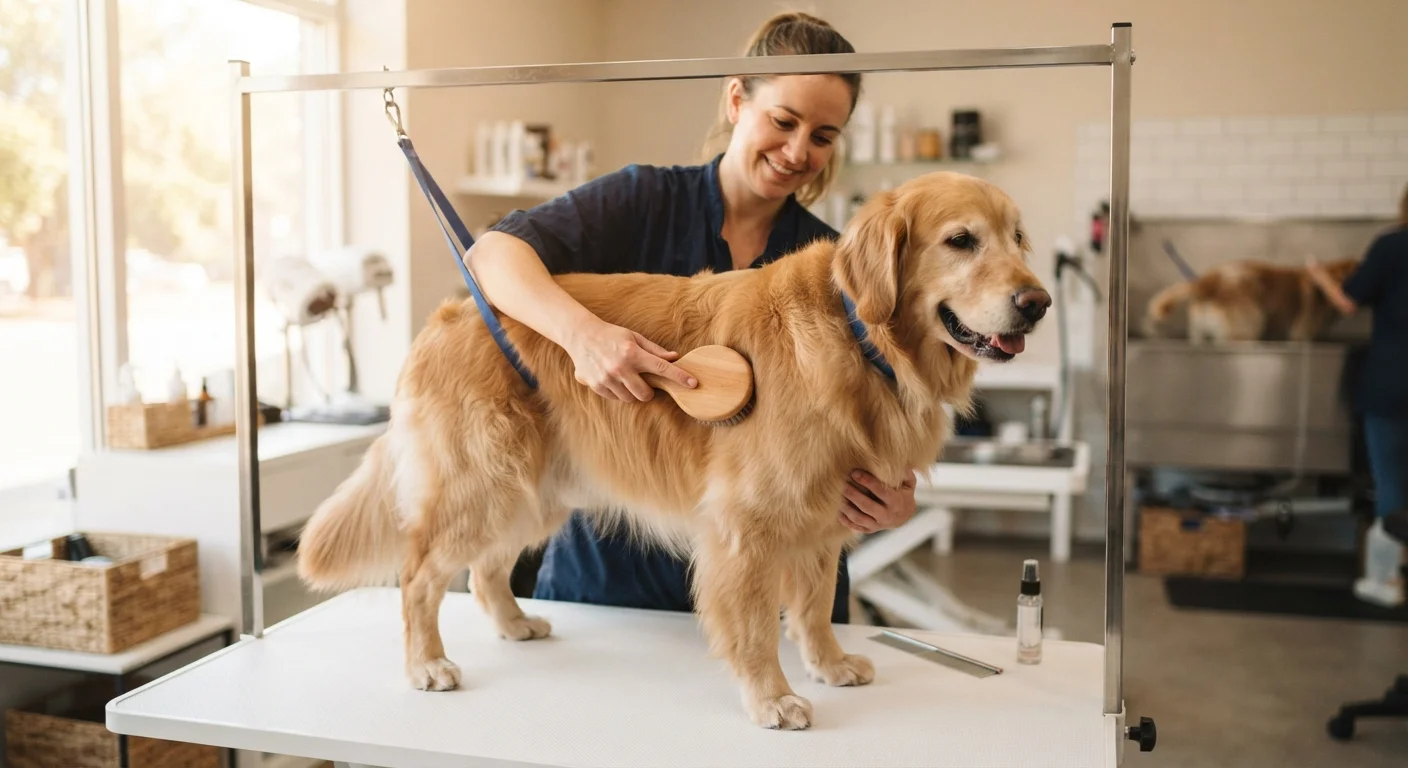
Double-coated dogs - such as Huskies, Golden Retrievers, and German Shepherds - have two distinct fur layers. The dense undercoat acts as insulation in both directions: keeping cold out in winter and heat out in summer. The outer guard hairs also protect against UV rays and insect bites. Shaving removes this system entirely, potentially causing a condition called post-clipping alopecia, where the coat grows back patchy or with an altered texture. Instead of shaving, regular undercoat brushing and deshedding treatments are far more effective for warm-weather comfort.
Myth
Cats groom themselves, so they never need a bath.
Fact
While cats are capable self-groomers, certain situations - including long coats, obesity, or skin conditions - make bathing genuinely necessary.
Self-grooming is efficient for most short-haired cats in good health, but it has real limits. Elderly cats, overweight cats, or those with mobility issues can't reach all areas. Long-haired breeds like Persians and Maine Coons are prone to matting and grease buildup that self-grooming simply can't address. Cats that come into contact with toxic substances also need prompt bathing. A gentle, feline-formulated shampoo used infrequently and with proper drying technique is appropriate - just avoid forcing the experience, as stress during baths can negatively condition a cat for future handling.
Myth
Human shampoo is fine to use on pets in a pinch.
Fact
Human shampoos are formulated for a different skin pH and can strip protective oils from your pet's coat, causing dryness and irritation.
Human skin has a pH of roughly 5.5 (mildly acidic), while dogs' skin sits closer to 6.5-7.5 (more neutral). Using a product calibrated for human skin disrupts a pet's acid mantle - the thin protective layer on the skin's surface - leaving them vulnerable to bacteria, parasites, and dryness. Even baby shampoos, often recommended as "gentle," aren't designed for animal physiology. Pet-specific products exist for this reason and are the appropriate choice. If you run out mid-bath, plain water is a safer stopgap than any human product.
Myth
Brushing is only needed when a pet's coat looks tangled or messy.
Fact
Regular brushing prevents mats, distributes natural oils, and removes dead fur before it causes skin problems - regardless of how the coat looks.
Mats often form beneath the surface before they're visible. By the time you can see tangling, the mat is typically already tight against the skin. Regular brushing - the frequency depending on coat length and type - keeps the undercoat clear, promotes healthy circulation, and gives owners a chance to spot lumps, skin irritation, ticks, or other issues early. It also serves as a low-stress bonding activity when introduced gradually. Think of brushing as maintenance, not just cleanup.
Myth
A dog's mouth is cleaner than a human's, so dental grooming isn't important.
Fact
Dogs and cats are prone to periodontal disease, and dental hygiene is a critical - and often neglected - part of grooming.
The idea that a dog's mouth is inherently "clean" is a popular myth with no scientific basis. Dogs and cats accumulate plaque and tartar just as people do. Without regular dental care, periodontal disease can develop, leading to pain, tooth loss, and - in serious cases - bacteria entering the bloodstream and affecting organ health. Tooth brushing with a pet-safe toothpaste, dental chews approved by veterinary dental organizations, and professional cleanings under veterinary guidance are all part of responsible grooming. Check your pet's mouth regularly and consult your vet if you notice bad breath, swollen gums, or reluctance to eat.
The Grooming Habits That Need a Second Look
Beyond the myths, there are common grooming habits that aren't quite harmful enough to make headlines but still chip away at your pet's wellbeing. Irregular brushing, for instance, doesn't just look untidy - it allows mats to form close to the skin, which can restrict circulation and trap moisture. With long-haired breeds especially, mats can become painful and require professional removal.
Never Use Scissors on Matted Fur at Home
It can be tempting to cut out a mat yourself, but the skin beneath is often pulled tightly into the tangle and is easy to nick accidentally. Mats close to the skin should be addressed by a professional groomer with the proper tools and technique. Attempting to cut them at home - especially near legs, armpits, or the abdomen - carries a genuine risk of cutting your pet.
Nail care is another area where good intentions go sideways. Many owners avoid trimming entirely out of fear of the quick (the blood vessel running through each nail), but nails that grow too long can curl inward, alter your pet's gait, and cause joint stress over time. If you're uncertain, a veterinarian or professional groomer can demonstrate the proper technique. You can also check our common mistakes new pet owners make for more overlooked care gaps.
80%
Dogs with periodontal disease by age 3
According to the American Veterinary Medical Association, most dogs show signs of periodontal disease by age three without regular dental care.
2-3x
More skin infections in shaved double-coated dogs
Veterinary dermatologists note that removing protective guard hairs significantly increases UV exposure and susceptibility to skin infections in double-coated breeds.
The bottom line: grooming isn't cosmetic. It's a window into your pet's overall health - and getting it right means questioning what you've always assumed was true. For a complete year-round view, our annual pet health checklist is a useful companion resource. You might also find popular pet health beliefs debunked a helpful read alongside this one.
When Grooming Stress Signals a Deeper Problem
If your pet reacts with unusual aggression, vocalizing, or extreme avoidance during grooming, it may be more than behavioral. Pain from underlying joint issues, skin conditions, or ear infections can make otherwise routine handling feel threatening. Before attributing resistance purely to temperament, consult your veterinarian to rule out a physical cause. Understanding your pet's signals matters - our guide to pet body language can help you read the cues.