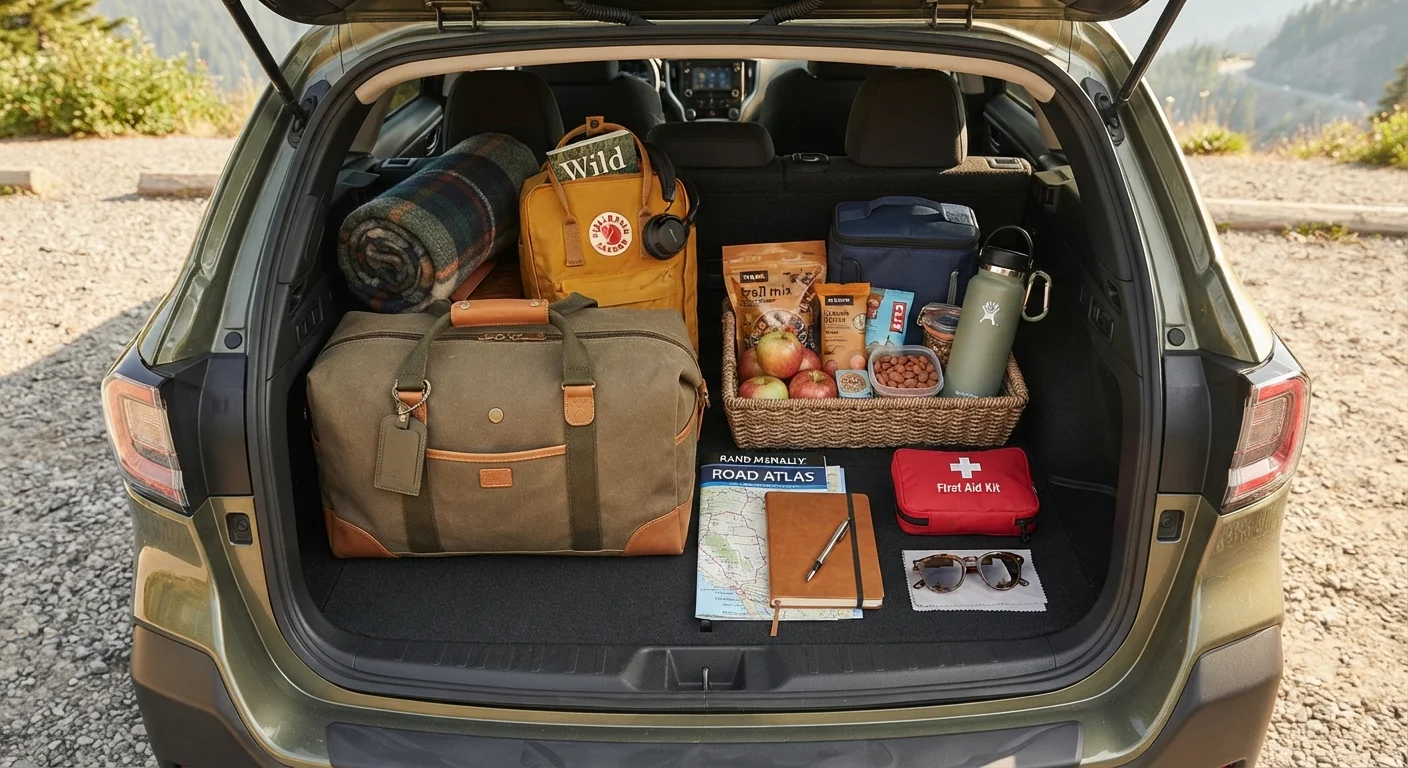
Keep essential documents - license, registration, insurance - accessible before every trip, not just long ones.
A basic emergency kit can make a roadside breakdown manageable rather than dangerous.
Navigation backups matter most when phone signal disappears in rural or mountainous areas.
Driver comfort and alertness items are just as important as mechanical readiness.
Packing snacks and hydration helps reduce impulsive stops and keeps energy steadier on long drives.
A practical pre-departure checklist covering documents, safety gear, snacks, navigation, and comfort items for any road trip.
Why a Pre-Departure Checklist Actually Matters
Most road trip disasters aren't dramatic - they're the small, avoidable ones. A forgotten insurance card at a traffic stop. A dead phone with no charger in the middle of nowhere. A five-hour drive with nothing to drink. The checklist below is built to catch those gaps before you back out of the driveway.
This isn't just for epic cross-country trips. Whether you're driving two hours to visit family or embarking on a week-long adventure, running through this list takes under an hour and pays for itself the moment something goes sideways. If you're still in the planning phase, see our guide to planning a route you'll actually enjoy driving for help balancing efficiency with discovery before you ever pack the car.
Documents & ID
Place your driver's license in your wallet and confirm it's current before leaving.Must
Locate your vehicle registration and keep it in the glovebox within easy reach.Must
Confirm your auto insurance card (physical or digital) is accessible and not expired.Must
If crossing state lines or into Canada or Mexico, check entry requirements and carry any needed ID or documentation.Should
Vehicle Readiness
Check tire pressure - including the spare - and inflate to the manufacturer's recommended PSI.Must
Verify engine oil, coolant, and windshield washer fluid levels are adequate for your trip distance.Must
Confirm your gas tank is full or plan your first fill-up stop, especially in rural corridors.Must
Test headlights, taillights, and turn signals to confirm all are functioning.Should
Safety & Emergency Gear
Pack a basic first aid kit with bandages, antiseptic wipes, pain reliever, and any personal medications.Must
Stow a reflective triangle or road flares in your trunk for roadside visibility.Must
Include jumper cables or a portable jump starter in case of a dead battery.Should
Add a flashlight or headlamp with fresh batteries for nighttime breakdowns.Should
Keep a basic toolkit - screwdriver, wrench, duct tape - for minor on-road fixes.Nice to have
Navigation & Communication
Download offline maps for your route in case cell coverage drops in remote areas.Must
Pack a physical road atlas or print key route directions as a backup to your phone.Should
Bring a car charger or power bank so your phone stays charged throughout the drive.Must
Save emergency contacts, roadside assistance numbers, and your destination address offline.Should
Food, Hydration & Comfort
Fill a reusable water bottle for each passenger and keep a larger backup supply in the trunk.Must
Pack snacks with staying power - nuts, whole fruit, protein bars - to reduce impulsive fast-food stops.Should
Bring sunglasses for every adult passenger to reduce glare fatigue on long stretches.Should
Add a small blanket or travel pillow for passenger comfort on extended drives.Nice to have
Pack a trash bag to keep the cabin tidy and reduce distraction from clutter.Nice to have
Kids, Pets & Special Passengers
Confirm child safety seats are installed correctly and haven't exceeded their expiration date.Must
Prepare a bag of activities, books, or downloaded entertainment for children on long drives.Should
Pack pet essentials - water bowl, leash, waste bags, and any medications - if traveling with animals.Must
Tools, Gear, and What to Keep in the Glovebox
Some items should live in your car permanently - not just on road trips. Your glovebox is prime real estate for documents and compact essentials. Your trunk is where emergency and comfort gear earns its keep.
Required
Portable Jump Starter
Lets you restart a dead battery without needing another vehicle - critical for solo or remote driving.
Required
Tire Pressure Gauge
Allows you to check tire PSI accurately before departure and during multi-day trips.
Required
Car Phone Mount
Keeps your navigation visible and hands-free so you're not handling your phone while driving.
Required
Offline Navigation App
Provides turn-by-turn directions without requiring cellular data in low-signal areas.
Optional
Roadside Emergency Kit
Bundles reflective triangles, a basic first aid kit, and jumper cables in one compact bag.
Optional
Insulated Cooler Bag
Keeps drinks cold and perishable snacks fresh without needing ice for shorter trips.
If your car is due for any maintenance, sort that before departure rather than during. Our car maintenance primer for new drivers walks through fluids, tires, and basic checks that are easy to miss. For ongoing upkeep habits, the Car Maintenance hub has you covered.
Don't Skip the Tire and Fluid Check
Skipping a pre-trip vehicle check is one of the most common causes of avoidable breakdowns. Tire blowouts from underinflation and overheating from low coolant are both preventable with a five-minute check. If you're unsure how to check these yourself, a quick visit to a mechanic before departure is well worth the time.
Finally, don't underestimate the driver. Staying alert through a long day behind the wheel requires deliberate strategy - our article on keeping energy up across a full day of driving covers timing, rest stops, and warning signs of fatigue worth reading before any extended drive.
Keep Emergency Numbers Offline
In areas with poor cell service, a fully charged phone is useless if you can't load a contact. Before leaving, write down or screenshot your roadside assistance number, a local emergency contact, and your accommodation details. Store these somewhere physically accessible - not just in an app that requires internet to open.
The content provided on our blog site traverses numerous categories, offering readers valuable and practical information. Readers can use the editorial team’s research and data to gain more insights into their topics of interest. However, they are requested not to treat the articles as conclusive. The website team cannot be held responsible for differences in data or inaccuracies found across other platforms. Please also note that the site might also miss out on various schemes and offers available that the readers may find more beneficial than the ones we cover.