
The Space Between Destinations Is the Point
Most people plan a road trip around where they're going. The hotel, the national park, the friend's house - these anchor the itinerary. But experienced road trippers know that the space between destinations is where the trip actually lives. A great stop doesn't need to be famous or far off-route. It just needs to pull you out of the car and into the moment.
Whether you're driving solo or with a crew, the stops you choose - and the ones you stumble into - shape how the trip feels in memory. See how to balance efficiency with discovery when mapping your route so you're not sacrificing one for the other.
Below are six types of stops worth building into any road trip - each one doing something different for the traveler.
The Scenic Overlook
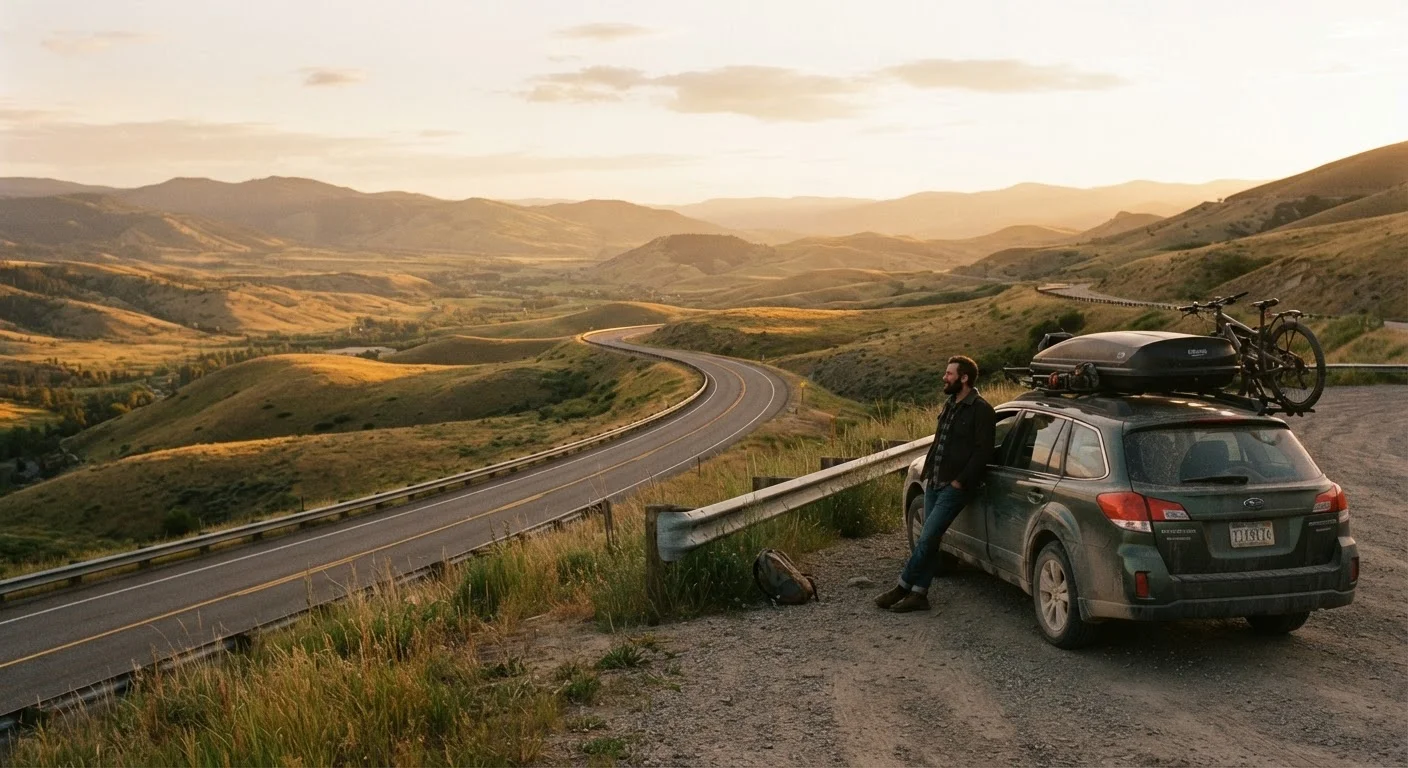
Every region has them - a pullout at the top of a pass, a bluff above a river bend, a stretch of coast where the road widens just enough to stop. Scenic overlooks cost nothing and take five minutes, but they break up the rhythm of driving in a way that's genuinely restorative. The physical act of stepping out, looking at something vast, and breathing different air resets your mood and your alertness.
Don't skip these because you're making good time. Good time is wasted if you arrive somewhere and the drive feels like a blur.
Five minutes at a scenic overlook can reset your mood better than a rest stop ever will.
The Regional Food Stop
Eating regionally is one of the quiet pleasures of driving yourself somewhere. A chain rest stop feeds you; a local diner or roadside stand tells you something about where you are. Green chile in New Mexico, boiled peanuts in South Carolina, a pasty in Michigan's Upper Peninsula - these foods are hyperlocal for a reason, and you have to go there to get them right.
Ask locals where they eat rather than defaulting to whatever maps navigation suggests. The recommendation you get from a gas station attendant will almost always beat the algorithm.
Regional food is geography you can taste - don't drive through it on an empty stomach.
The Quirky Roadside Attraction
America has a long tradition of eccentric roadside landmarks - giant statues, unusual museums, roadside art installations, towns built around a single oddity. These stops are easy to dismiss as kitsch, but they're often the ones people talk about years later. They're inherently shareable, inherently surprising, and they remind you that you're somewhere specific, not just passing through generic highway miles.
A quick look at roadside attraction databases or travel blogs focused on a region will surface options you'd never find otherwise. Build in 20 minutes and see what's there.
The giant roadside landmark you almost skipped is usually the story you tell at dinner.
The Small-Town Main Street
Small towns along secondary highways often have a main street that rewards a slow walk: an independent bookstore, a bakery, a local history museum that's open three days a week. These stops work especially well midday when driving fatigue tends to set in. Getting out and walking - even for 30 minutes - shakes off the physical stiffness that accumulates in a car seat.
The best small-town stops aren't curated for tourists, which means they require a little willingness to wander without a plan. That low-stakes exploration is exactly what makes them worthwhile.
A 30-minute walk through a small-town main street does more for road fatigue than any energy drink.
The Natural Feature Detour
A waterfall that's eight miles off the main road. A cave system with self-guided tours. A state park that doesn't show up in the top search results but sits right along your route. Natural feature detours tend to be the most effort-requiring stops - they might add an hour or require a short hike - but they're also the ones that feel most earned.
Check state park websites and regional nature guides before you leave rather than trying to find these on the fly. Cell service along scenic routes isn't always reliable enough for last-minute research. For a practical look at what can go wrong when you rely too heavily on navigation, see the myths that make people underprepare for long drives.
Natural detours take more effort but tend to leave the strongest impression on a long trip.
The Unplanned Pause
Sometimes the best stop is the one with no category. A field with a hot air balloon lifting off. A roadside stand selling something you've never heard of. A view that appears around a curve and makes someone in the car say wait, stop. These moments can't be scheduled, but they can be made more likely - by driving at a pace that allows spontaneity, by staying off the interstate when there's a parallel scenic route, and by resisting the pressure to stay ahead of the estimated arrival time.
Whether you're traveling solo or with others, unplanned pauses are easier when everyone in the car (or just you) has agreed in advance that the schedule has room to breathe.
The unplanned pause is impossible to schedule but easy to make room for - leave the schedule loose.
How to Make Room for Good Stops
The single biggest mistake road trippers make is scheduling too tightly. When every hour is accounted for, there's no room to turn at a hand-painted sign pointing toward a waterfall, or linger over pie at a diner that's been open since 1962. Spontaneity works better with a little structure underneath it - give yourself a daily driving limit and treat anything under it as found time.
Set a Daily Mileage Ceiling
Decide on a maximum number of driving hours per day - most travelers find six to seven hours is a comfortable ceiling - and treat anything under that as time available for stops. This reframes unplanned pauses from 'delays' to 'wins.' It also helps prevent the fatigue that comes from pushing through long stretches without breaks, which is both unpleasant and a genuine safety concern.
A useful approach: identify one or two anchor stops per day as non-negotiables, then leave the rest of the day's driving loose. That buffer is where the trip surprises you. For more on what makes this kind of travel distinct from other modes, see why road trips feel so different from any other kind of travel.
Check Conditions Before You Detour
Scenic routes, natural attractions, and small-town stops can be affected by seasonal closures, road construction, or weather. Before committing to a detour - especially one that adds significant distance - verify that the site is accessible. State park websites and local tourism offices are reliable sources. Never assume a route or attraction is open based solely on what mapping apps show.