
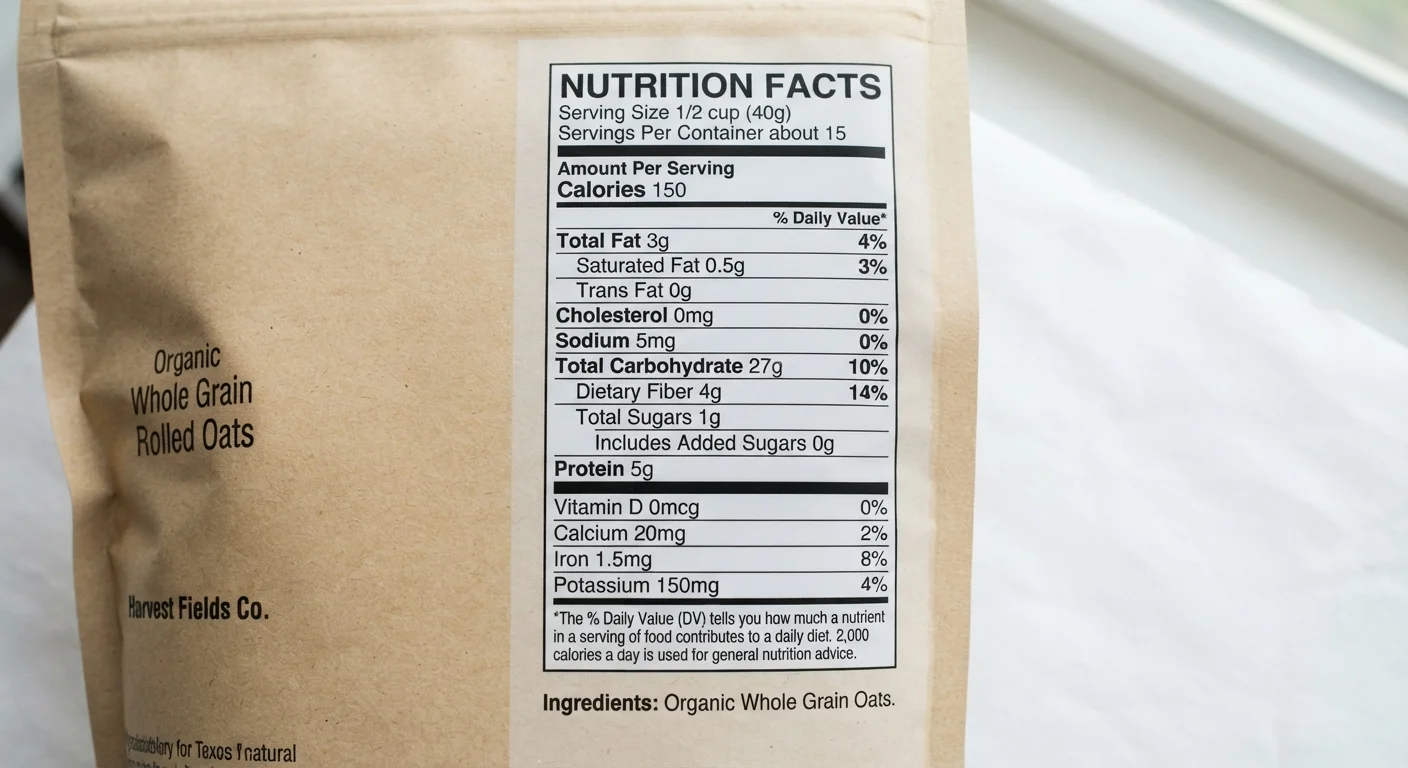
Why the Nutrition Facts Label Exists
The Nutrition Facts label is a standardized panel regulated by the U.S. Food and Drug Administration (FDA) and required on most packaged foods and beverages sold in the United States. Its purpose is straightforward: give consumers a consistent, comparable snapshot of a product's nutritional content so they can make informed choices. The format was significantly updated in 2016 and 2020 to reflect newer dietary science, making today's labels more useful than their predecessors.
Reading labels well isn't about obsessing over every gram - it's about knowing which numbers matter for your goals and how to interpret them quickly. Whether you're managing sodium intake, tracking fiber, or simply trying to eat more whole foods, the label is one of the most reliable tools available to you. For a broader look at how packaging communicates nutritional and ingredient information, see this plain-language guide to product labels.
| Label Regulator | U.S. Food and Drug Administration (FDA) |
| Most Recent Major Update | 2020 (compliance for most manufacturers) (FDA.gov) |
| "Low" Daily Value threshold | 5% DV or less (FDA Nutrition Facts label guidance) |
| "High" Daily Value threshold | 20% DV or more (FDA Nutrition Facts label guidance) |
| Reference daily calorie intake | 2,000 calories (standard reference only) (FDA) |
| Ingredient list order | Descending by weight |
Breaking Down Each Section
Serving Size and Servings Per Container. This is where many readers go wrong. The serving size is not a recommendation - it's a standardized reference amount set by the FDA, based on what people typically consume. All the numbers below it apply to that one serving. If a bag of chips lists two servings and you eat the whole bag, every value on the label doubles. Always check this line first.
Calories. Calories measure the energy a food provides. The FDA generally uses 2,000 calories per day as a reference point for Daily Value calculations, but individual needs vary based on age, sex, activity level, and health goals. Calorie counts are useful in context - not as a standalone metric of a food's quality.
Nutrients to Limit. Saturated fat, sodium, and added sugars are flagged because most Americans consume them in excess. Added sugars - now listed separately from total sugars since the 2020 update - are sugars introduced during processing, as opposed to sugars naturally present in fruit or milk. A 5% Daily Value (DV) or less is considered low; 20% DV or more is high.
Nutrients to Get Enough Of. Dietary fiber, vitamin D, calcium, iron, and potassium are highlighted because many people fall short of recommended amounts. Foods with 20% DV or more for these nutrients are considered good sources.
Daily Value (DV)
A reference percentage showing how much of a nutrient one serving contributes to a standard daily diet of 2,000 calories. Use it to compare products and gauge whether a nutrient level is high or low - 5% DV or less is low, 20% DV or more is high.
Added Sugars
Sugars and syrups added to foods during processing or preparation, distinct from sugars naturally occurring in whole foods like fruit. The FDA requires added sugars to be listed separately on the Nutrition Facts label.
Saturated Fat
A type of dietary fat, solid at room temperature, found primarily in animal products and some tropical oils. Current dietary guidance generally recommends limiting saturated fat intake.
Serving Size
A standardized unit defined by the FDA based on typical consumption amounts, not a dietary recommendation. All nutrition values on the label apply to this amount only.
Dietary Fiber
The indigestible portion of plant foods that supports digestive health and helps you feel full. Most Americans consume less than the recommended daily amount, making it a nutrient to actively seek on labels.
For practical strategies on building meals around nutritious, affordable ingredients, the guide on eating well on a budget offers concrete starting points.
The Ingredient List and What It Reveals
Directly below or beside the Nutrition Facts panel, you'll find the ingredient list. Ingredients are listed in descending order by weight - the first ingredient is the most abundant. If refined flour or added sugar appears first or second, the product is primarily made of those ingredients.
Watch for multiple forms of the same ingredient spread across the list (e.g., corn syrup, dextrose, and cane sugar all count as added sugars). Splitting them keeps any single sugar lower on the list, even if the combined total is substantial. Understanding this tactic helps you read past marketing language on the front of the package.
Front-of-Package Claims Can Be Misleading
Terms like "natural," "multigrain," or "reduced fat" on the front of a package are marketing descriptors, not FDA-defined nutritional standards (with a few exceptions like "low sodium"). Always flip to the Nutrition Facts panel and ingredient list for reliable information. A product labeled "reduced fat" may compensate with higher added sugar.
If you're working to understand how processed and minimally processed foods compare nutritionally, this overview of whole vs. processed foods pairs well with label-reading skills. You can also apply label knowledge directly to meal planning to build more consistent eating habits over time.
This article is for general informational and educational purposes only and is not a substitute for personalized nutritional or medical advice. Consult a registered dietitian or qualified healthcare provider for guidance specific to your health needs.