
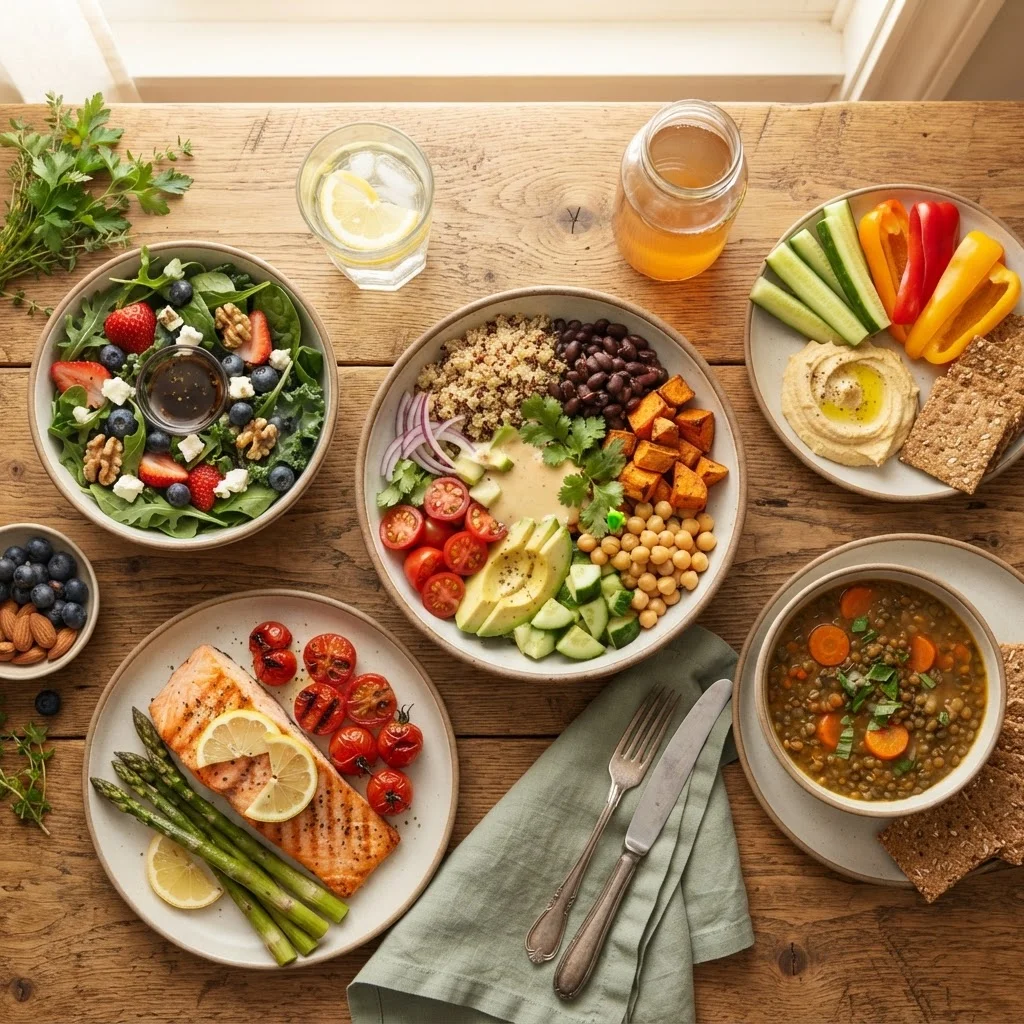
Why 'Balanced' Is Harder to Define Than It Sounds
The phrase "balanced diet" appears on packaging, in doctor's offices, and across social media - yet it rarely comes with a clear definition. That vagueness leaves many people cycling between rigid meal plans and abandoning structure altogether. In reality, nutritional balance is a practical principle, not a precise formula.
At its core, eating in balance means consistently consuming a wide range of foods that together supply what your body needs - energy, building materials for tissue, and micronutrients that regulate nearly every biological process. No single meal achieves this in isolation. Balance is measured across days and weeks, not individual plates.
Balance Is Relative to Your Individual Needs
Nutritional requirements differ by age, sex, activity level, pregnancy status, and health conditions. The general principles here reflect broad population guidance, but a registered dietitian can tailor recommendations to your specific circumstances. General information is not a substitute for personalized dietary advice.
This distinction matters because it frees you from the all-or-nothing thinking that makes healthy eating feel unsustainable. A slice of birthday cake doesn't undermine a well-nourished week.
The Core Food Groups and What They Actually Do
Most nutrition frameworks - including the U.S. Dietary Guidelines for Americans - organize foods into broad categories, each contributing something distinct:
- Fruits and vegetables supply fiber, vitamins (like C and folate), minerals, and antioxidant compounds. Variety in color generally means variety in nutrients.
- Whole grains provide complex carbohydrates for sustained energy, along with B vitamins and fiber that refined grains largely lose in processing.
- Proteins - whether from lean meats, fish, eggs, legumes, or tofu - support muscle repair, immune function, and enzyme production.
- Dairy or fortified alternatives contribute calcium and vitamin D, both critical for bone health.
- Healthy fats from sources like nuts, seeds, avocados, and olive oil support brain function, hormone production, and the absorption of fat-soluble vitamins (A, D, E, K).
For a deeper look at how to distribute these groups across a full week, see what nutritional balance looks like in a weekly meal plan.
90%
Americans not meeting vegetable intake recommendations
According to the U.S. Centers for Disease Control and Prevention, roughly 9 in 10 Americans consume fewer vegetables than recommended by federal dietary guidelines.
57%
Of daily calories from ultraprocessed foods (U.S. adults)
A study published in BMJ Open found that ultraprocessed foods accounted for more than half of daily caloric intake among U.S. adults on average.
What Balance Looks Like in Practice
Translating principles into daily habits is where most people get stuck. A few evidence-informed patterns make balance easier to apply:
- Fill roughly half your plate with vegetables and fruit at most meals - this is consistent with guidance from multiple national health bodies.
- Choose whole over refined when selecting grains: oats instead of pastry, brown rice instead of white when possible.
- Vary your protein sources across the week rather than relying on a single food.
- Limit ultraprocessed foods - those engineered with added sugars, sodium, and refined fats - not because they're forbidden, but because they crowd out more nutritious options when eaten habitually.
Start With One Swap, Not an Overhaul
Trying to restructure your entire diet at once is one of the most common reasons people give up quickly. Instead, identify one recurring meal that lacks variety - breakfast, perhaps - and add a single new food group to it. Small, consistent changes compound over weeks into genuinely different eating habits.
Understanding what's in your food also helps. Decoding nutrition labels is a practical skill that supports better everyday choices without requiring a nutrition degree.
Common Misconceptions Worth Clearing Up
Several widespread beliefs complicate how people approach balanced eating:
- "Clean eating" equals balance
- Labeling foods as clean or dirty is not a scientific framework. Some foods marketed as "clean" are highly processed; some labeled "bad" are genuinely nutritious. Focus on overall dietary patterns, not moral labels.
- Supplements can replace food variety
- Supplements address specific deficiencies but don't replicate the complex matrix of nutrients, fiber, and phytochemicals found in whole foods. They are an addition, not a substitute.
- Carbohydrates are the problem
- Research consistently shows that the type and quality of carbohydrates matters far more than carbohydrate intake itself. Whole-food carb sources remain a cornerstone of well-studied healthy diets worldwide.
This article is for general informational and educational purposes only and is not a substitute for personalized medical or dietary advice. Consult a qualified healthcare professional or registered dietitian before making significant changes to your diet, especially if you have an existing health condition.
“The best diet is one that includes a wide variety of minimally processed foods, mostly plants, and is one you can actually sustain over the long term.”
— Walter Willett, Professor of Epidemiology and Nutrition, Harvard T.H. Chan School of Public Health