
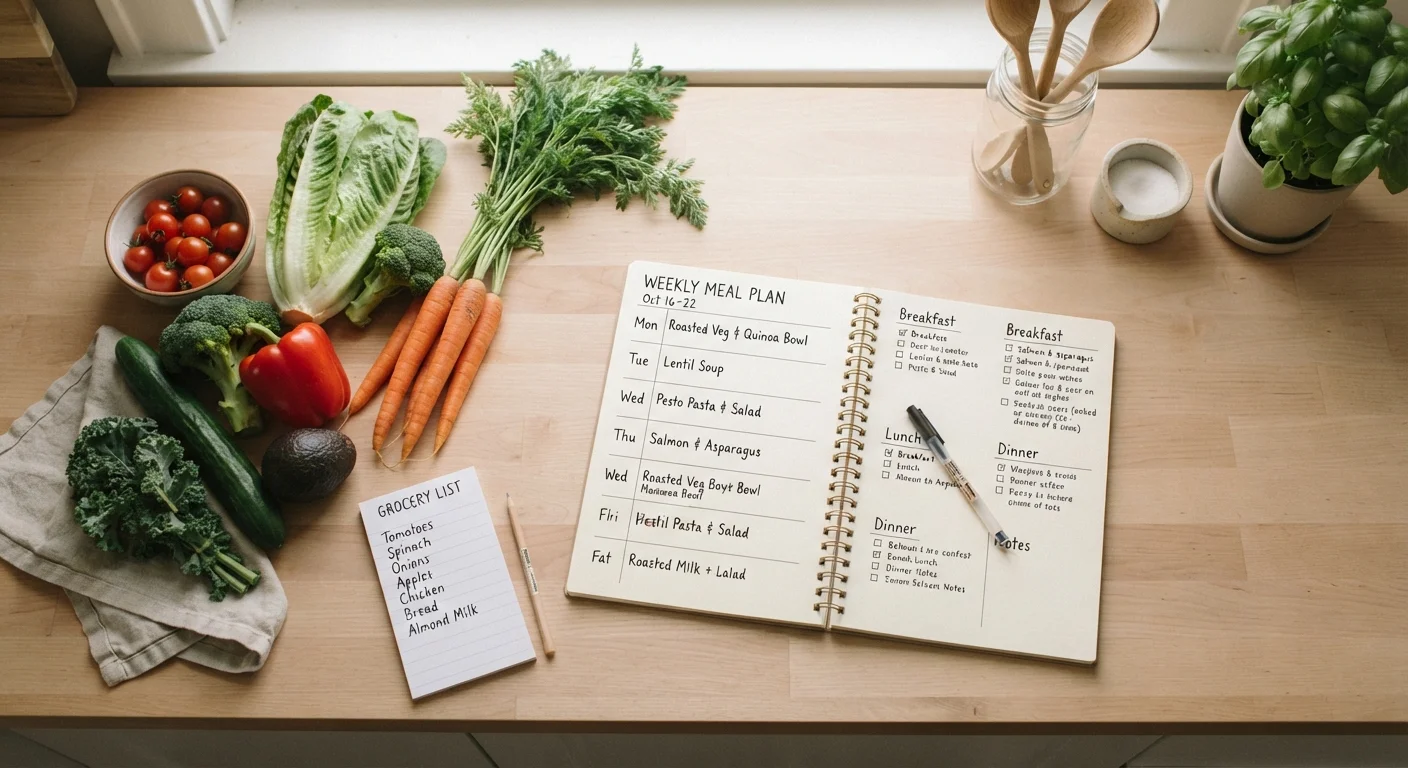
Why Most Meal Plans Fail Busy People
The standard advice to "plan all your meals on Sunday" works for very structured schedules - but most people's weeks don't cooperate. A meeting runs late, a child gets sick, or motivation simply isn't there at 6 p.m. on a Wednesday. When a rigid plan meets an unpredictable week, the plan usually loses.
A flexible framework approaches the problem differently. Instead of locking in seven specific dinners, it defines meal categories, anchor ingredients, and intentional low-effort slots before any recipes are chosen. This structure absorbs disruption without requiring you to start over.
If you've heard that meal planning needs to be elaborate or time-consuming to work, that's one of several meal planning myths worth examining that tend to keep people stuck. The goal here is a system calibrated to your actual week - not an idealized version of it.
What you will need
What You'll Need Before You Start
Setting up this framework takes between 20 and 45 minutes the first time. After that, the weekly maintenance drops to roughly ten to fifteen minutes. Gather the following before you begin:
Meal planning template or notebook
Provides a visual structure to assign meal categories to each day of the week.
Pantry and refrigerator inventory list
Identifies what you already have so you avoid duplicate purchases and reduce waste.
Weekly calendar or schedule
Helps you match meal complexity to your actual energy and time on each day.
Shopping list app or printed template
Keeps your grocery run focused and organized around your framework categories.
Flexibility Is the Point - Not a Flaw
A meal plan that falls apart by Wednesday usually lacks built-in flexibility, not discipline. Designing your framework to bend - rather than break - is what separates a sustainable system from a rigid one. If your current approach keeps stalling, see why mid-week collapse happens and what actually fixes it.
How to Build Your Framework
Follow these steps in order the first time. Once the framework is established, you'll only revisit steps 4 through 6 each week.
Audit your week before you plan your meals
Open your calendar and identify your three busiest days - the evenings where cooking time will realistically be under 20 minutes. Mark those as low-effort slots. The remaining days become your opportunity for slightly more involved meals or batch prep. This calendar-first step is what makes a framework flexible rather than aspirational.
Define your meal categories, not specific recipes
Rather than committing to "lemon herb chicken on Tuesday," assign a category: protein + vegetable + grain. Build four to six categories that cover your week - such as soup or stew night, grain bowl night, quick protein night, and one flex night. This approach means you can swap ingredients freely based on what's fresh or on hand without abandoning the structure.
For a deeper look at how nutritional variety fits into a weekly plan, see what nutritional balance actually means in a weekly meal plan.
Choose one or two batch-cook anchors
Select one or two versatile proteins or bases - such as roasted chicken thighs, cooked legumes, or a large grain like farro or brown rice - that can be prepared on a lower-demand day and used across multiple meals. These anchors do the heavy lifting of your framework without requiring nightly cooking from scratch.
If you're weighing whether full batch cooking or lighter daily prep suits your lifestyle better, this comparison of batch cooking vs. daily prep breaks down the trade-offs clearly.
Build your shopping list from the framework, not the recipes
Once your categories and anchors are set, generate a shopping list organized by section: produce, proteins, pantry staples, and dairy or alternatives. Cross-reference your pantry inventory first to avoid redundant purchases. A well-built list aligned to your framework naturally reduces waste because you're buying to fill categories, not individual dishes.
For practical guidance on structuring your list, shopping lists that actually work covers how to keep spending focused without over-buying.
Designate one flex night per week
Assign at least one evening explicitly as a flex night - this could mean takeout, a simple breakfast-for-dinner option, or using whatever needs to be cleared from the fridge. Building this intentionally into your plan removes the guilt and prevents the cascade where one off-night derails the rest of the week.
Review and refine for ten minutes each week
At the end of the week, spend ten minutes noting what worked, what went uneaten, and which days the plan felt mismatched to your energy. Adjust one or two variables in your next week's framework - swapping a category, changing your anchor choice, or shifting your prep day. Small iterative adjustments compound into a system that genuinely fits your life over four to six weeks.
Don't Over-Plan Your Busiest Days
Assigning complex recipes to high-demand weekdays is one of the most common reasons meal plans stall. Reserve your simpler meal slots - sheet pan dinners, grain bowls, or leftovers - for Tuesday through Thursday when schedules tend to be most compressed. Save more involved cooking for days when you genuinely have the time and energy.
Use a Checklist to Stay Consistent
Once you have your framework set up, a structured checklist helps you repeat the process without reinventing it each week. The Weekly Meal Planning Checklist covers every stage - from pantry audit to storage - and works well alongside this framework. Consistency is easier when the process itself becomes routine.
Keeping Your Framework Working Over Time
The framework only becomes easier with repetition. Within a few weeks, your categories will feel natural, your batch-cook anchors will rotate predictably, and your shopping list will require less thought to compile.
For those working on structuring other areas of daily life alongside their eating habits, building structured daily routines offers a complementary approach to organizing time at home. Similarly, readers focused on broader nutrition principles will find useful context in the fundamentals of healthy eating as a reference point for the choices made within each meal category.
A flexible framework isn't a perfect plan - it's a resilient one. That distinction is what makes it worth building.
This article is for general informational and educational purposes only and does not constitute dietary or medical advice. Consult a qualified healthcare professional or registered dietitian for guidance tailored to your individual health needs.