
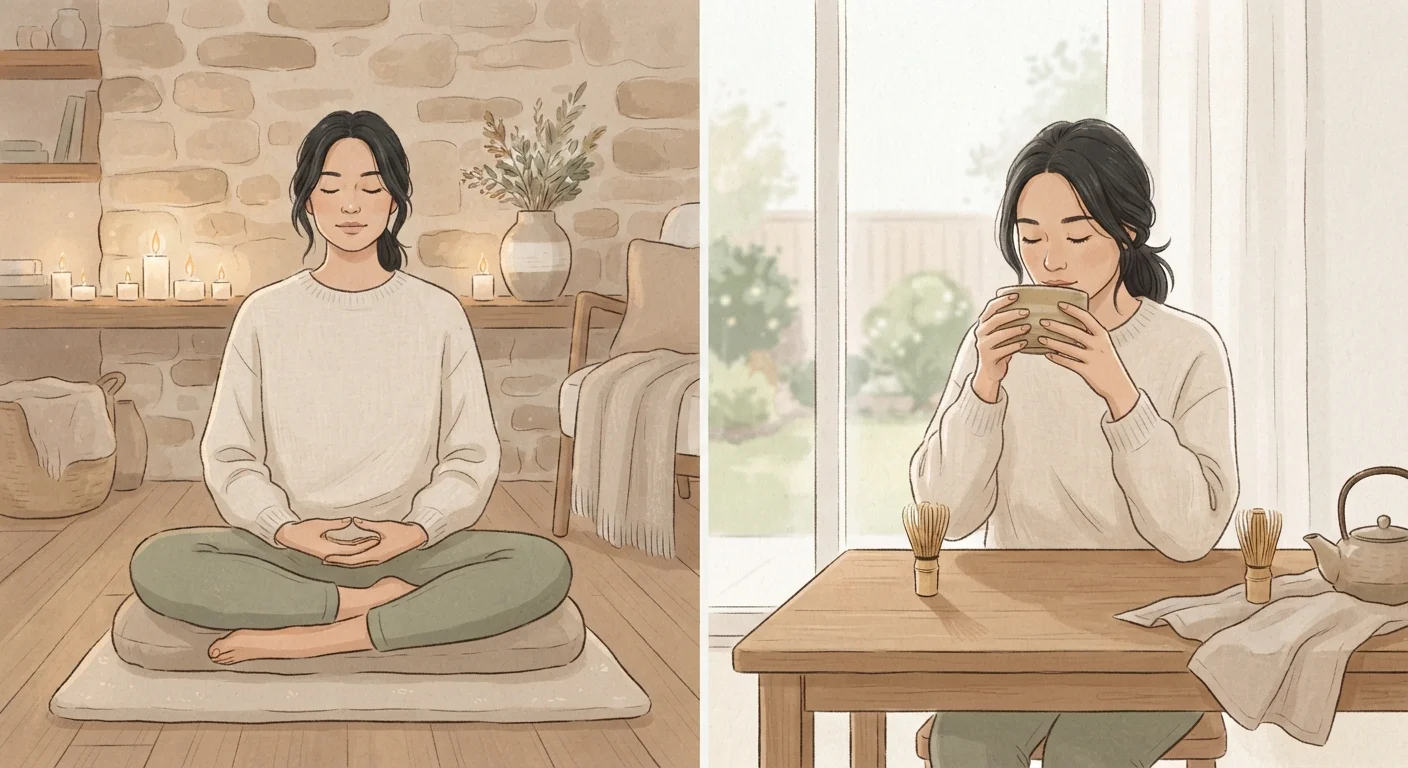
Defining the Terms Clearly
The confusion between mindfulness and meditation is understandable - wellness culture blends them constantly. But they describe fundamentally different things, and knowing the difference helps you practise more intentionally.
Mindfulness is a quality of attention. It means noticing what is happening right now - thoughts, sensations, surroundings - without judging or reacting automatically. It is something you can bring to almost any activity: eating, walking, listening to a colleague, even doing dishes.
Meditation is a practice - a deliberate set of techniques performed during a dedicated block of time, usually in a still, quiet setting. Not all meditation is mindfulness-based. Loving-kindness meditation, visualization, mantra repetition, and breathwork all qualify as meditation, yet they pursue different mental states.
The simplest way to hold the distinction: mindfulness is a capacity; meditation is an activity that can train that capacity - though it is far from the only way to do so.
| Criterion | Mindfulness | Meditation |
|---|---|---|
| What it is | A quality of present-moment awareness | A structured practice or technique |
| When it happens | Any time, during any activity | During a dedicated, scheduled session |
| Requires quiet time? | No | Typically yes |
| Always involves the other? | No - mindfulness without meditation is common | No - many meditation styles are not mindfulness-based |
| Primary goal | Sustained, non-judgmental attention | Varies by type: focus, relaxation, insight, compassion |
| Learning curve | Low barrier; can start immediately | Modest; benefits from guidance and consistency |
How They Overlap - and Where They Diverge
Mindfulness-based meditation - sitting quietly and deliberately focusing on the breath or bodily sensations - is the most popular form in Western wellness contexts. Programmes like Mindfulness-Based Stress Reduction (MBSR), developed at the University of Massachusetts in the late 1970s, formalized this overlap and generated much of the research that gave both terms mainstream credibility.
But the overlap is a subset, not an equation. Consider two scenarios:
- A person who meditates daily using a mantra-based technique is meditating - but not necessarily practising mindfulness in the traditional sense.
- A person who pauses before a difficult conversation, notices their breath and tension, and responds calmly is practising mindfulness - without a single formal meditation session behind them.
Research published across clinical psychology journals suggests both dedicated meditation practice and informal mindfulness exercises are associated with reduced stress reactivity and improved emotional regulation. However, the mechanisms and magnitudes differ depending on the specific practice and context. This is an active research area, and results vary across studies and individuals.
8 weeks
Typical MBSR programme length
The Mindfulness-Based Stress Reduction programme, commonly studied in clinical research, runs across an eight-week structured curriculum.
~14%
US adults who meditate
A National Health Interview Survey found roughly 14% of U.S. adults reported meditating in the prior 12 months, up from about 4% in 2012.
Just as fitness professionals distinguish between flexibility and mobility - two related but separate physical qualities - mental wellness benefits from equally precise language. For a parallel example of why this kind of distinction matters, see our explainer on flexibility vs. mobility.
Practical Ways to Engage With Each
Understanding the distinction opens up your options rather than limiting them.
To practise mindfulness informally
- Choose one routine activity - morning coffee, brushing teeth, a short walk - and give it your full attention for its duration.
- When your mind wanders (it will), gently return attention to sensory detail: texture, temperature, sound.
- Apply the same principle to conversations: listen to understand rather than to respond.
To begin a formal meditation practice
- Set a consistent time - even five to ten minutes - and a quiet location.
- Choose a simple anchor: the breath is the most common starting point.
- When thoughts arise, acknowledge them without judgment and redirect attention to your anchor.
- Gradually extend duration as the habit becomes stable.
This Is General Wellness Information
The information here is educational and not a substitute for guidance from a qualified mental health professional. If you are managing anxiety, depression, trauma, or another mental health condition, please consult a licensed clinician before relying on mindfulness or meditation as a primary intervention. These practices can complement professional care - they are not a replacement for it.
Neither approach requires an app, a cushion, or any cost. The primary investment is attention - which, fortunately, is already available to you.