
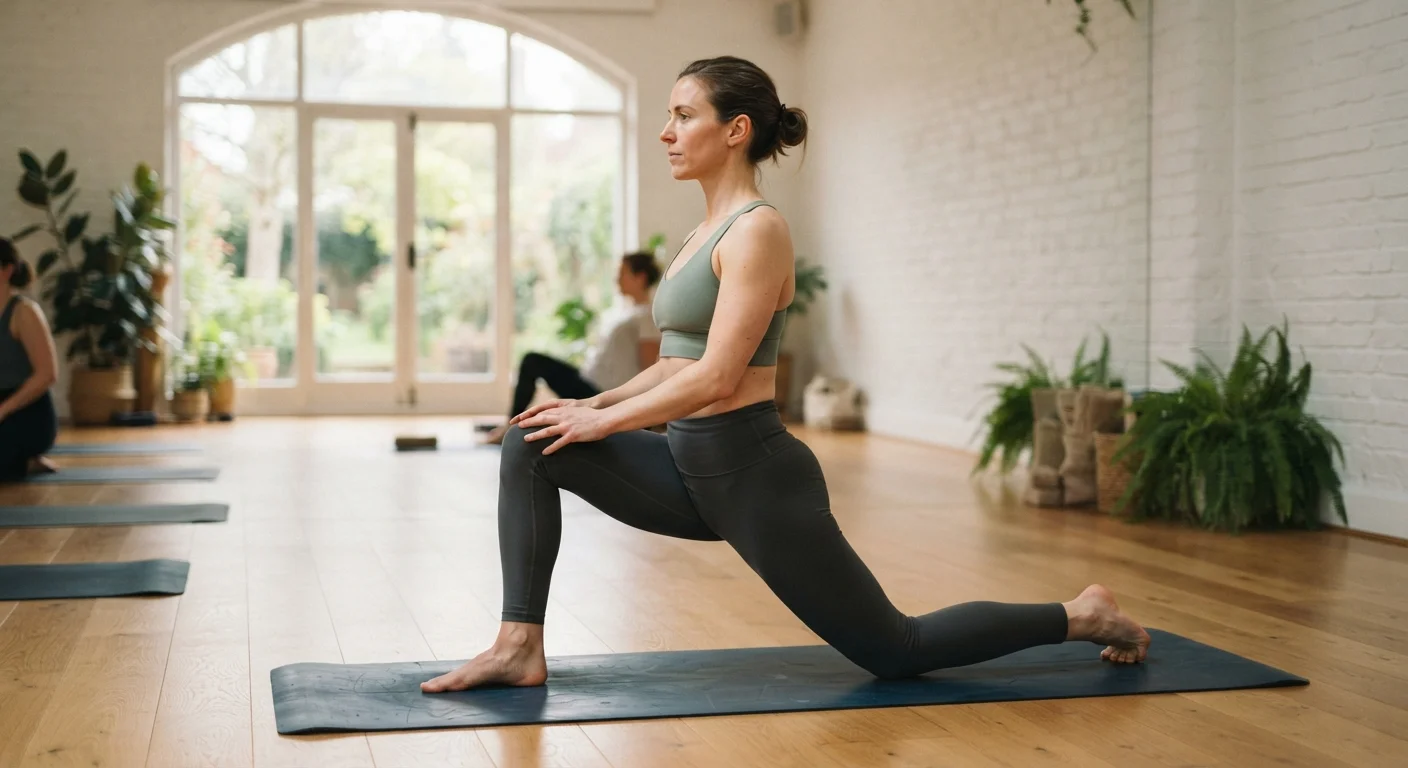
Defining the Terms
Flexibility is the capacity of a muscle or group of muscles to lengthen passively - meaning with external help such as gravity, a strap, or another person. When you sit in a forward fold and feel your hamstrings stretch, that's flexibility at work. You're not doing much; the muscle is simply being elongated.
Mobility, by contrast, is your ability to actively move a joint through its intended range of motion with control. It requires not just muscle length, but strength, coordination, and neuromuscular awareness. A mobile hip joint can move freely through its full arc because the surrounding muscles are strong enough to support and guide it - not just long enough to allow it passively.
Think of it this way: flexibility is potential range, mobility is usable range. Similar distinctions show up in mental wellness - just as mindfulness and meditation are often conflated but describe different practices, flexibility and mobility are frequently treated as synonyms when they're not.
How You Can Have One Without the Other
This is where many people are surprised. It's entirely possible to be quite flexible while having poor mobility - and vice versa.
A common example: a gymnast may have extreme hamstring flexibility, able to do a full split passively. But if they can't actively raise their straight leg high without external assistance, their mobility in that same range is limited. The muscle can be stretched; it can't necessarily be controlled through that stretched position under load.
The opposite pattern also occurs. Strength athletes sometimes develop good active control through the ranges they train regularly - a deep squat, for instance - but have little passive flexibility outside those patterns. Their mobility within trained movements is solid; their general flexibility less so.
| Flexibility | Mobility | |
|---|---|---|
| Definition | Passive muscle lengthening ability | Active joint range with control |
| Primary requirement | Muscle and connective tissue length | Strength, coordination, and range |
| Trained by | Static and passive stretching | Dynamic movement and end-range strength |
| Functional impact | Moderate - range potential only | High - usable, controlled movement |
| Can exist without the other? | Yes - flexible but not mobile | Yes - mobile but not very flexible |
| Best assessed by | Passive range-of-motion tests | Active movement quality under load |
Understanding which quality you're actually lacking helps you train more precisely rather than defaulting to more stretching when what's needed may be strength or motor control work.
Training Each Quality Effectively
Flexibility is typically improved through sustained, low-intensity stretching. Static stretching - holding a position for 30 to 60 seconds - is the most common method and is well-supported for increasing passive muscle length over time when practiced consistently. It is generally most productive after a workout when muscles are warm, rather than before intense activity.
Mobility training is more dynamic. It commonly involves:
- Controlled articular rotations (CARs) - slow, deliberate joint circles that train active range
- Strength work at end range - exercises that build muscle control at the extremes of your range, such as deep lunges with active hip engagement
- Dynamic warm-up movements - leg swings, hip circles, and thoracic rotations that rehearse movement patterns with control
Start With Your Stiffest Joints
Rather than stretching everything equally, identify the one or two joints that most limit your daily movement - commonly the hips or thoracic spine. Focusing your mobility practice there first tends to produce the most noticeable functional gains. Once those areas improve, expand your routine to include other joints.
Neither approach replaces the other. A practical movement routine includes both passive stretching to maintain or increase tissue length and active mobility work to build the strength to use that length.
Why the Distinction Matters for Long-Term Health
Both flexibility and mobility tend to decline with age and with prolonged inactivity. However, mobility loss tends to have more immediate functional consequences - it's what limits your ability to reach overhead, descend stairs safely, or squat to pick something up.
~30%
Decline in joint range with age
Research generally indicates that joint range of motion can decrease by roughly 20-30% between early adulthood and later life, particularly in the hips and spine, without consistent movement training.
2-3x/week
Mobility practice frequency for improvement
Movement specialists commonly recommend at least two to three dedicated mobility sessions per week to achieve meaningful, lasting improvement in active joint range.
Passive flexibility alone won't prevent these losses if the muscles aren't also trained to be strong in those positions. This is a key reason physical therapists and movement specialists increasingly emphasize mobility work alongside traditional stretching in general fitness programming.
For most adults, the practical goal isn't to maximize flexibility for its own sake, but to maintain enough mobility across major joints - hips, thoracic spine, shoulders, ankles - to move comfortably through daily life and preferred activities. Starting with even 10 minutes of targeted mobility work a few times a week can produce noticeable improvements in how freely you move.
This article is for general informational and educational purposes only and is not a substitute for professional medical or physical therapy advice. If you have an injury, chronic condition, or specific movement concern, consult a qualified healthcare or rehabilitation professional.