
Why Organizing Myths Are So Persistent
Home organization advice is everywhere - on social media feeds, in glossy magazines, and across countless YouTube channels. Much of it is visually appealing but functionally misleading. The problem isn't that people lack motivation; it's that they're working from a set of assumptions that quietly undermine every effort they make.
These myths feel intuitive on the surface, which is exactly what makes them sticky. Before you reorganize a single drawer, it's worth examining whether the beliefs guiding you are actually helping - or making the whole process harder than it needs to be. For a deeper look at how clutter affects your mental state, see why clutter feels so overwhelming.
Myth
You just need more storage. A few more bins, baskets, or shelving units and everything will finally have a place.
Fact
More storage containers typically make the problem worse by giving clutter more places to hide.
This is possibly the most common and costly organizing mistake. When a home feels disorganized, the instinct is to add more containers - but the real issue is almost always volume. Buying more storage without first reducing what you own just spreads the clutter over a larger footprint. Organization experts consistently point to decluttering as the necessary first step: decide what stays, then find a home for it. Purchasing bins before that step guarantees you'll fill them with things you don't need.
Myth
Organized people are just naturally tidy - some people are wired that way and others aren't.
Fact
Tidiness is a learned set of behaviors, not a fixed personality trait you either have or don't.
This myth is particularly damaging because it frames disorganization as identity rather than habit. People who maintain tidy homes have typically built specific routines - returning items after use, doing small daily resets, making decisions about new items before they enter the home. None of these behaviors are innate. They are practiced skills. Framing it as a personality issue removes the agency that actually drives change. If sentimental attachment makes letting go harder for you, navigating the guilt of letting go explores that tension thoughtfully.
Myth
A big weekend organizing session is the solution. Once everything is sorted, it will stay that way.
Fact
A single intensive session creates a temporary state, not a durable system - without maintenance habits, entropy returns quickly.
The appeal of a marathon organizing session is real: block off a Saturday, pull everything out, sort it all, feel accomplished. But without a maintenance system in place, most spaces revert within weeks. Organization researchers and professional organizers broadly agree that the maintenance phase - the small, boring daily actions - is what determines whether a system holds. A one-time effort is a useful reset, but it is not a substitute for routine. Think of it like cleaning out your inbox: satisfying in the moment, irrelevant without a way to manage incoming messages going forward.
Myth
Everything needs a designated place and should always be returned there immediately.
Fact
Systems need to be realistic, not rigid. A good system accommodates how you actually behave, not how you wish you behaved.
The idea that every item needs a perfect, permanent home sounds sensible - and it partly is. But when the system is too rigid, people abandon it entirely rather than maintain it imperfectly. A more functional approach designs for real use patterns: if you always drop your keys on the kitchen counter, put a small dish there. If your kids dump backpacks by the front door, install hooks at that exact spot. Working with actual behavior rather than against it is what separates systems that hold from systems that collapse. Spending time and money building an elaborate structure you'll never maintain is a recognized pitfall - similar in spirit to budgeting myths that make people give up before they start.
Myth
An organized home should look Pinterest-perfect at all times.
Fact
A functional home and a photo-ready home are different goals. Chasing the latter can actively undermine the former.
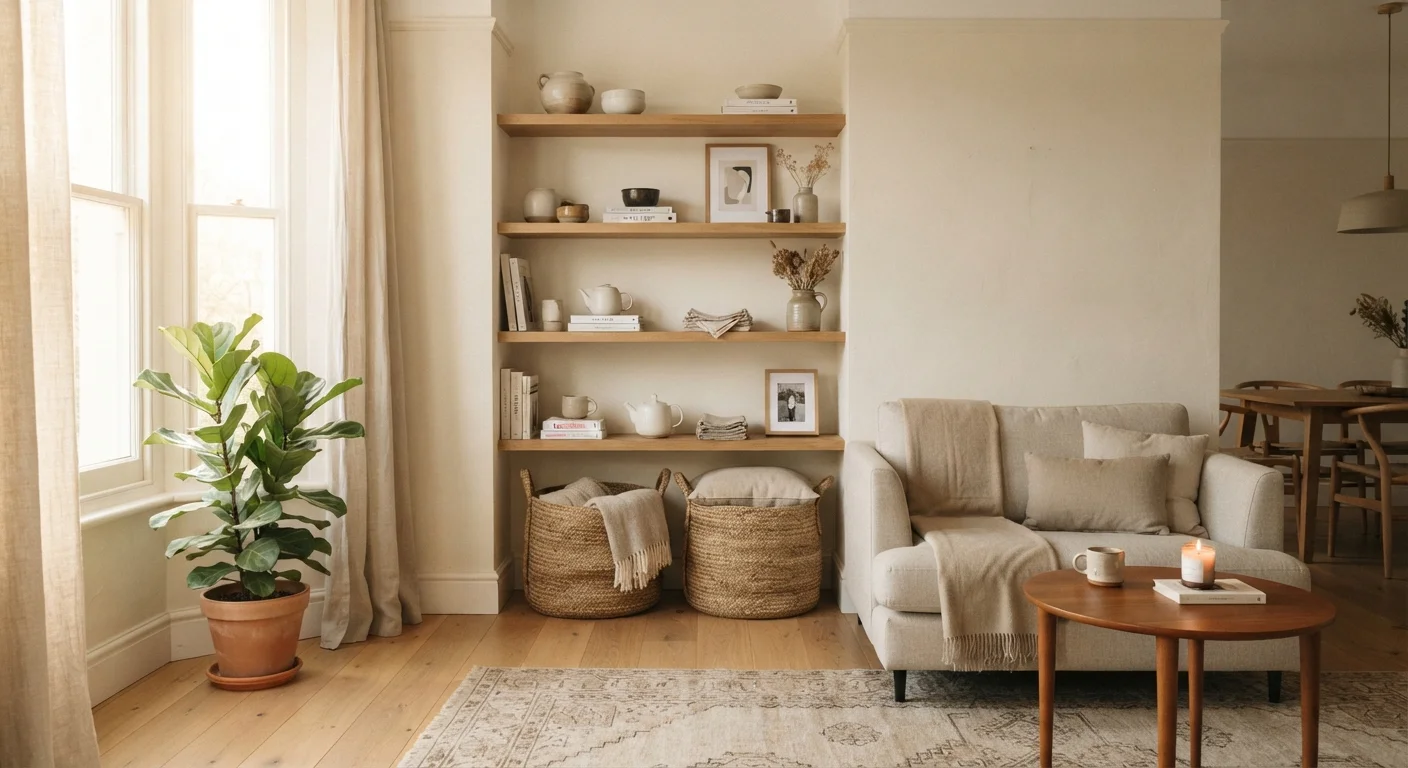
Aspirational images of immaculate, magazine-styled interiors set an aesthetic standard that few real households can or should maintain. When the bar is perfection, any deviation feels like failure - and that emotional weight makes people abandon their systems altogether. Functional organization prioritizes ease of use, speed of reset, and reduced friction in daily life. A basket that corrals clutter in a lived-in living room is a success, even if it doesn't photograph well. Letting go of the perfectionism attached to home organization is often the single most liberating shift a person can make. If you find home projects generally stalling out, it may also be worth reading about why home projects lose momentum.
What Actually Makes Organization Stick
Once you've cleared out the myths, a clearer picture emerges: sustainable organization is built on systems that match your real behavior, not an idealized version of it. That means setting up storage where you actually drop things, not where a magazine layout suggests. It means accepting that some visual messiness in a high-use area is fine, as long as it's intentional and contained.
Don't Reorganize Before Decluttering
Reorganizing a space before removing what you no longer need is one of the most common reasons organizing efforts fail. Sorting and containerizing items you should have discarded locks clutter into your system and makes future decluttering harder. Always decide what stays first - then design storage around those items.
Small, consistent habits outperform occasional overhauls every time. A five-minute nightly reset - putting stray items back, clearing a counter - does more long-term good than a Saturday spent color-coding your pantry. The habits that keep organized homes running are almost always unglamorous and repetitive, which is precisely why they work.
If you're building these routines from scratch, you may also find it useful to examine common routine myths that slow progress - many of the same misconceptions apply. And if designated zones appeal to you, zoning your living space is one of the most practical structural changes you can make to reduce daily chaos.
25%
of Americans cite clutter as a major source of stress
According to a survey conducted by the American Psychological Association, home environment - including disorder and clutter - is a notable contributor to daily stress for many US adults.
~40%
of household items rarely or never used
Professional organizers and researchers in consumer behavior consistently find that a large proportion of what most households own is seldom touched, supporting the case for reducing before storing.