
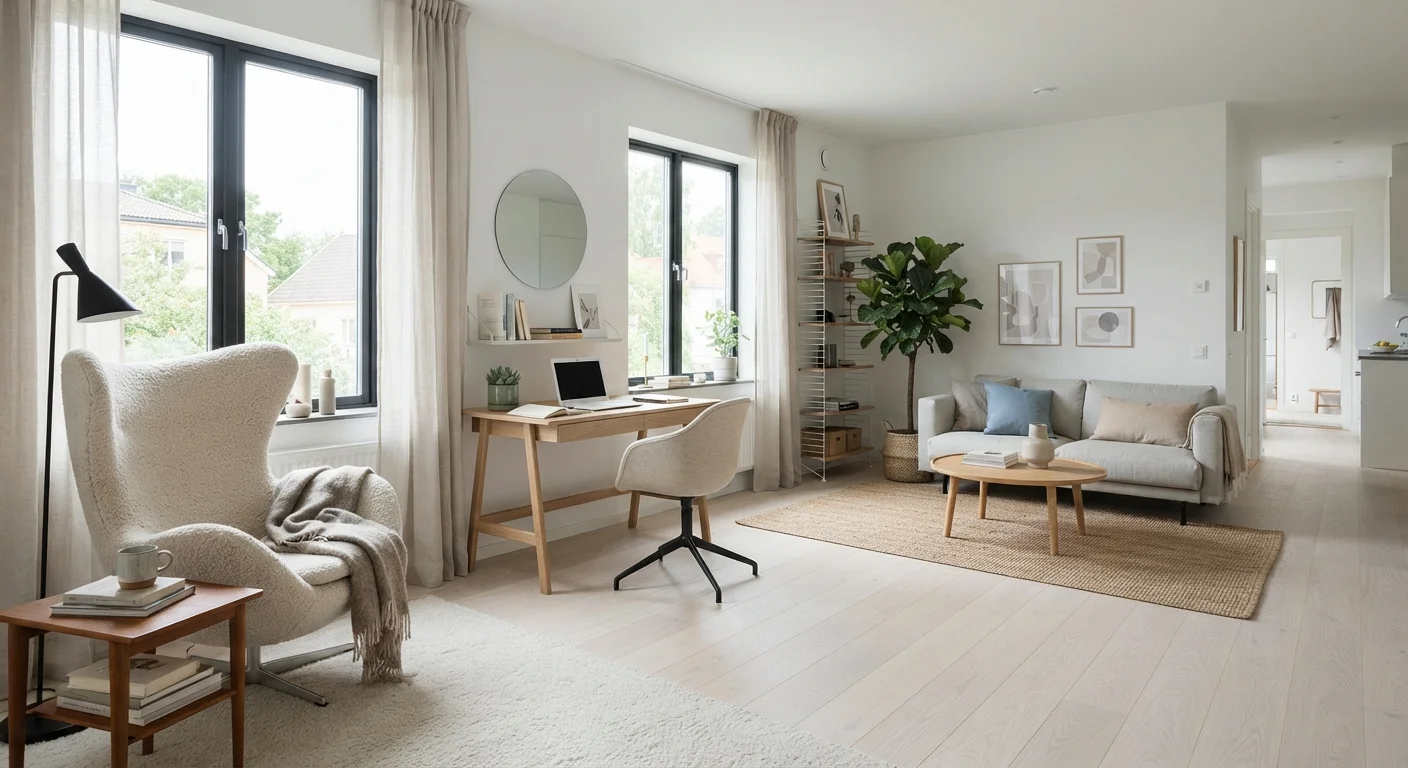
Why Zoning Works
A cluttered home is rarely the result of owning too much - it's usually the result of items having no clear home. When a pair of shoes, a stack of mail, and a child's toy all end up on the kitchen counter, the problem isn't laziness. It's the absence of an obvious alternative. Zoning solves this by giving every activity - and therefore every object connected to it - a logical place to live.
Research in environmental psychology suggests that a disorganized space competes for our attention, increasing mental load even when we're not actively thinking about the mess. You can read more about this in our article on why clutter feels overwhelming. Zones interrupt that cycle by creating predictability. When your brain knows that work materials live at the desk and relaxation happens on the sofa, it stops scanning the environment for cues and can settle.
Before starting, it helps to do a light pass through your space. Our room-by-room decluttering guide walks you through that process without the overwhelm.
What you will need
How to Zone Your Home
Zoning doesn't require a renovation or a big budget. It's a shift in how you think about space, reinforced by a few deliberate choices about placement and visual cues.
Map your current activities, not your rooms
List every regular activity that happens in your home: sleeping, working, exercising, eating, cooking, watching TV, reading, hobbies, pet care, children's play. Don't organize by room yet - just capture what actually happens in your household day to day.
This step prevents the common mistake of defaulting to room labels ("the living room") that don't reflect real use patterns. Many people work at the kitchen table, exercise in the bedroom, and watch TV from a bed.
Group activities into compatible clusters
Look for natural groupings among your listed activities. Activities that require quiet focus (working, reading, studying) belong in one cluster. High-energy or social activities (TV, games, conversation) belong in another. Messy or hands-on activities (cooking, crafts, pet grooming) form a third group.
These clusters become the foundation of your zones. Most homes need four to six zones: a focused work or study zone, a relaxation and social zone, a food preparation zone, a sleep and rest zone, an entry and transition zone, and optionally a hobby or active zone.
Assign zones to physical locations
Now match your activity clusters to specific areas of your home. Work with the architecture you have - natural light, proximity to outlets, noise levels, and traffic flow all matter. A work zone needs to be away from the TV. A relaxation zone benefits from softer lighting. The entry zone should be immediately accessible at the front door.
Sketch a simple floor plan on paper and pencil in your proposed zones. This doesn't need to be precise - it's a thinking tool, not a blueprint.
Establish visual and physical cues for each zone
Physical reinforcement is what makes zones legible to everyone in the household. Common tools include:
- Rugs - define the footprint of a seating or reading area
- Lighting - task lamps for work zones, warmer or dimmer lights for rest zones
- Storage containers - a basket or tray acts as a visual boundary for items that belong in that zone
- Furniture placement - positioning pieces to face inward toward their zone reinforces the area's identity
You don't need to redecorate. Even a change in lighting or a single piece of purposeful furniture placement can shift how a space is used.
Relocate items to match their zone
Go room by room and move items to the zone they belong in. Chargers go to the workspace or entry zone. Books go to the reading zone. Exercise gear goes to the active zone. If an item doesn't fit any zone, it either belongs in storage or is a candidate for removal.
This step often surfaces items that were stored out of habit rather than logic. Be willing to move things even if they've lived somewhere for years - habit isn't the same as function.
Test the system for one week and adjust
Live in your newly zoned space for a full week before making changes. Notice where items still migrate to the wrong places - those migration patterns reveal either a zone boundary that isn't clear enough or an activity that needs its own zone.
At the end of the week, adjust any zones that clearly aren't working. The system should feel easier, not more effortful. If a zone feels forced, revisit whether the activity grouping made sense for your actual habits.
Start with your highest-friction area
If one area of your home consistently accumulates clutter - a kitchen counter, a hallway floor, a bedroom chair - start your zoning effort there. Solving the most irritating spot first builds momentum and demonstrates quickly that the system works. You can also check whether common organization myths have been shaping your approach in ways that work against you.
Once your zones are established, the goal is maintenance rather than perfection. A structured daily routine tied to your zones - such as a five-minute reset at the end of each day - keeps the system running with minimal effort. You might also explore one-in-one-out versus seasonal decluttering as a companion habit to prevent zones from slowly filling beyond capacity.
Avoid over-organizing before decluttering
Zoning works best when you're not organizing around things you don't need. If your zones are filled with excess items, the system will still feel chaotic. Consider a basic declutter pass in each area before finalizing zone boundaries - it doesn't need to be exhaustive, just enough to remove obvious excess.
Making Zones Stick Long-Term
The most common reason zoning fails is that zones are defined mentally but not physically. If a workspace zone is just a corner of the dining table with no visual boundary, other activities will creep back in. Small investments in physical demarcation pay off disproportionately: a dedicated desk lamp signals "work happens here," a rug anchors a reading chair as its own space, and a small basket by the door becomes the unambiguous home for keys and mail.
Involve everyone in the household in defining zones. When family members understand the logic - and ideally help shape it - they're far more likely to respect the boundaries. Label zones for children; adults often benefit from labels too, at least initially.
Revisit your zones every few months. Life changes - a new hobby, a work-from-home arrangement, a growing child - and zones should evolve with it. What matters is that the system keeps serving the people living in the space. For a broader look at which areas of your home are worth investing attention in, see our guide on rooms that reward attention.
Zones Are for People, Not Perfection
The goal of zoning is to reduce daily friction - not to create a showroom. If your system requires constant policing or feels rigid, it won't last. Build in flexibility for how your household actually lives, and prioritize the zones that affect your stress levels most. A zone that gets abandoned is a signal to adjust, not a failure.