
Why a Room-by-Room Approach Works
Whole-home decluttering projects fail most often because they try to do too much at once. When every drawer, closet, and surface is in flux simultaneously, the effort becomes unmanageable - and the lack of visible progress makes it easy to give up. A room-by-room approach solves this by containing the work to a single, completable unit.
The logic is straightforward: finishing one room gives you a clear win before moving to the next. That completed space becomes evidence that the process actually works, which sustains motivation. It also means at least one area of your home feels orderly even while other rooms are mid-process.
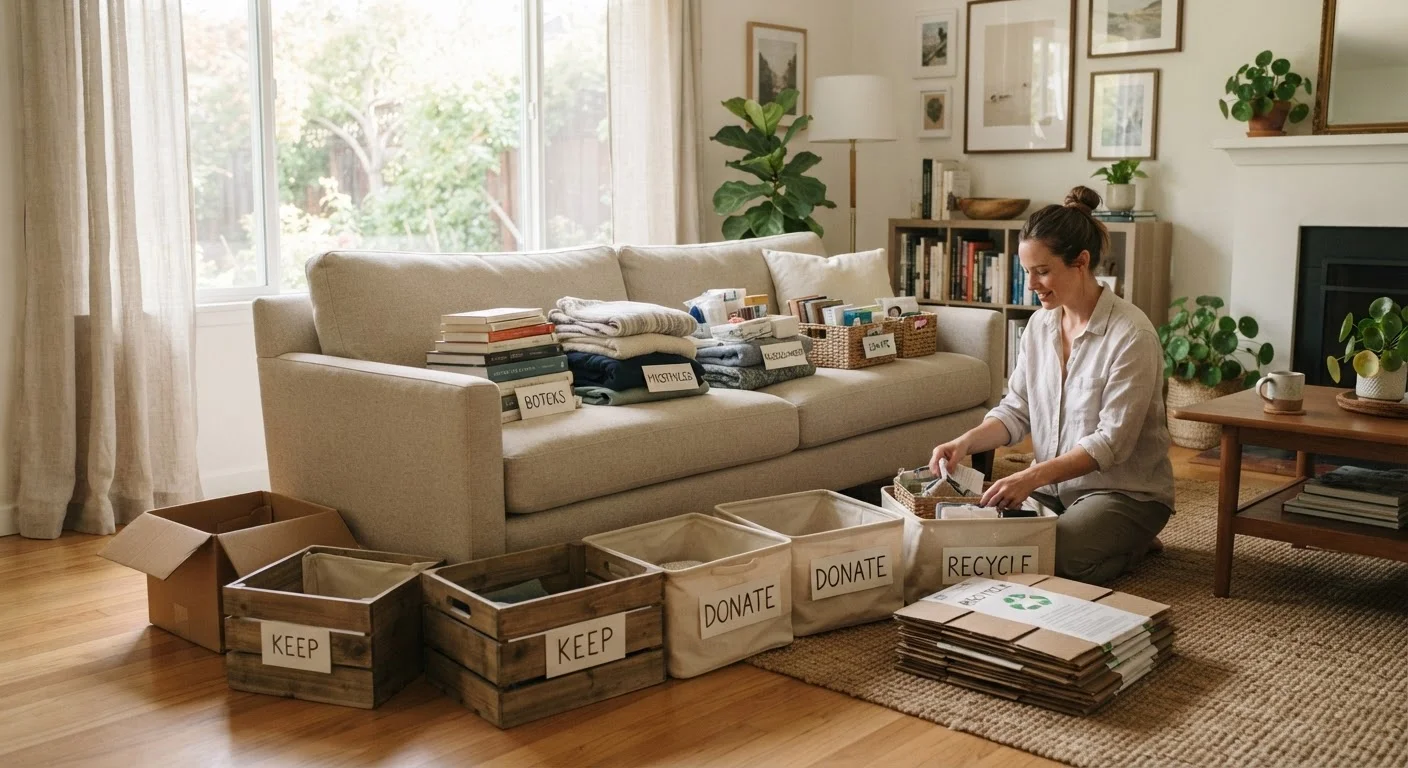
Before starting any room, gather three containers - one for items to keep, one for items to donate or rehome, and one for trash. This sorting structure is the backbone of every session and removes the need to make storage decisions mid-declutter. For background on how defined spaces reduce day-to-day disorder, see how functional zones reduce daily chaos.
Decluttering
The process of removing items from a space that are no longer useful, wanted, or appropriate - reducing volume so what remains is intentional and accessible.
Three-container method
A sorting system using three designated bins - keep, donate, and discard - to make decisions item by item without mixing categories mid-session.
Surface creep
The gradual accumulation of miscellaneous items on horizontal surfaces like countertops, tables, and shelves, usually occurring when items lack a designated home.
One-in-one-out rule
A maintenance habit where for every new item brought into the home, one existing item is removed - preventing net accumulation over time.
Functional zone
A defined area in a room designated for a specific activity or category of items, making it easier to put things away consistently and find them again.
The Kitchen: Start with What You Actually Use
The kitchen is often the highest-return room to declutter first. It's used multiple times daily, so even modest improvements in organization create noticeable efficiency gains almost immediately.
Begin with cabinets and drawers. Pull everything out category by category - baking supplies, cooking tools, storage containers - and keep only what you use regularly. Duplicate items and gadgets with a single narrow purpose are common culprits. If you haven't reached for it in six months, it's a reasonable candidate for donation.
Countertops deserve particular attention. A clear counter makes food preparation faster and cleaning easier. Appliances used less than once a week can usually be stored rather than displayed. The goal isn't a stark, empty kitchen - it's one where every visible item earns its place.
Set a Timer to Avoid Decision Fatigue
Kitchen decluttering can slow to a crawl when every item prompts lengthy deliberation. Try working in focused 20-minute blocks with a short break between categories. Keeping decisions brisk - especially for low-stakes items like duplicate utensils - preserves your energy for trickier choices later.
Pantry and refrigerator shelves follow the same keep-or-go logic, with the added step of checking expiration dates. Grouping similar items together - grains with grains, canned goods with canned goods - makes it easier to see what you have and avoid duplicate purchases.
The Bedroom: Creating a Space for Rest
The bedroom's primary function is rest, and visual clutter works against that. Studies on sleep environments consistently note that a disordered room is associated with difficulty winding down. Decluttering this space is as much about supporting mental calm as it is about organization.
Start with surfaces: the nightstand, dresser top, and any chairs used as informal clothing storage. These accumulate items quickly and are the first thing you see when you wake up. Clear them down to genuine essentials.
Move to the closet next. The standard recommendation - remove everything, then return only what you've worn in the past year - works well here. Seasonal items you want to keep can be stored elsewhere rather than crowding the main closet. Donate clothing that no longer fits or reflects how you actually dress now, not how you might dress someday.
Don't Declutter Other People's Belongings
In shared households, it's important to limit your decluttering to your own items unless you have explicit agreement from everyone affected. Removing or donating a housemate's or partner's possessions without consent - even with good intentions - causes conflict and erodes trust. Focus on shared spaces collaboratively, and respect individual ownership of personal items.
Under the bed is a natural storage zone, but unstructured under-bed storage tends to become a hidden pile. If you use it, keep items in flat, lidded containers and limit what goes there to genuine long-term storage, not overflow.
Living Areas and Entryways: Taming High-Traffic Zones
Living rooms and entryways share a common problem: they're where items arrive and accumulate before being put away properly - if they ever are. Decluttering these spaces requires both removing what doesn't belong and creating a system for what does.
In a living room, start with surfaces - coffee tables, side tables, shelves - and remove anything that doesn't serve the room's function. Books you've read, decorative items you no longer notice, remote controls for devices you no longer own: these are all fair targets. Then evaluate seating and floor space for items that have drifted in from other rooms.
The entryway sets the tone for the whole home. A dedicated hook for keys, a designated spot for bags, and a narrow surface for daily essentials can dramatically reduce the chaos of coming and going. If your entryway doubles as a dumping ground, a small basket or tray - with a weekly clear-out habit - is often enough to contain the drift.
For broader ideas on where home changes deliver the most return, rooms that reward the most attention is worth exploring alongside this guide.
Digital Clutter Counts Too
Physical spaces aren't the only ones that benefit from a clear-out. Overflowing email inboxes, disorganized phone photo libraries, and cluttered desktop folders create low-grade cognitive load similar to physical clutter. Once your rooms feel more ordered, applying the same category-by-category approach to digital spaces is a natural next step.
Keeping the Momentum Going
A decluttered home doesn't stay that way automatically. Once the initial work is done, the question becomes how to maintain it without repeating the same intensive effort every few months.
Two broad strategies are available: a daily habit like the one-in-one-out rule - where bringing something new in means letting something go - or a periodic seasonal review. Each has advantages depending on how your household runs. For a detailed comparison, see one-in-one-out vs. seasonal decluttering.
Small daily resets - five to ten minutes before bed to return items to their designated spots - prevent accumulation from reaching the point where a full session is needed again. Pairing a tidy-up routine with an existing habit, like making coffee in the morning or brushing your teeth at night, makes it easier to sustain.
If you're looking to extend the same energy to broader home improvements, small changes that make a big difference at home offers a complementary starting point. The aim in both cases is the same: a home that supports daily life rather than complicating it.