
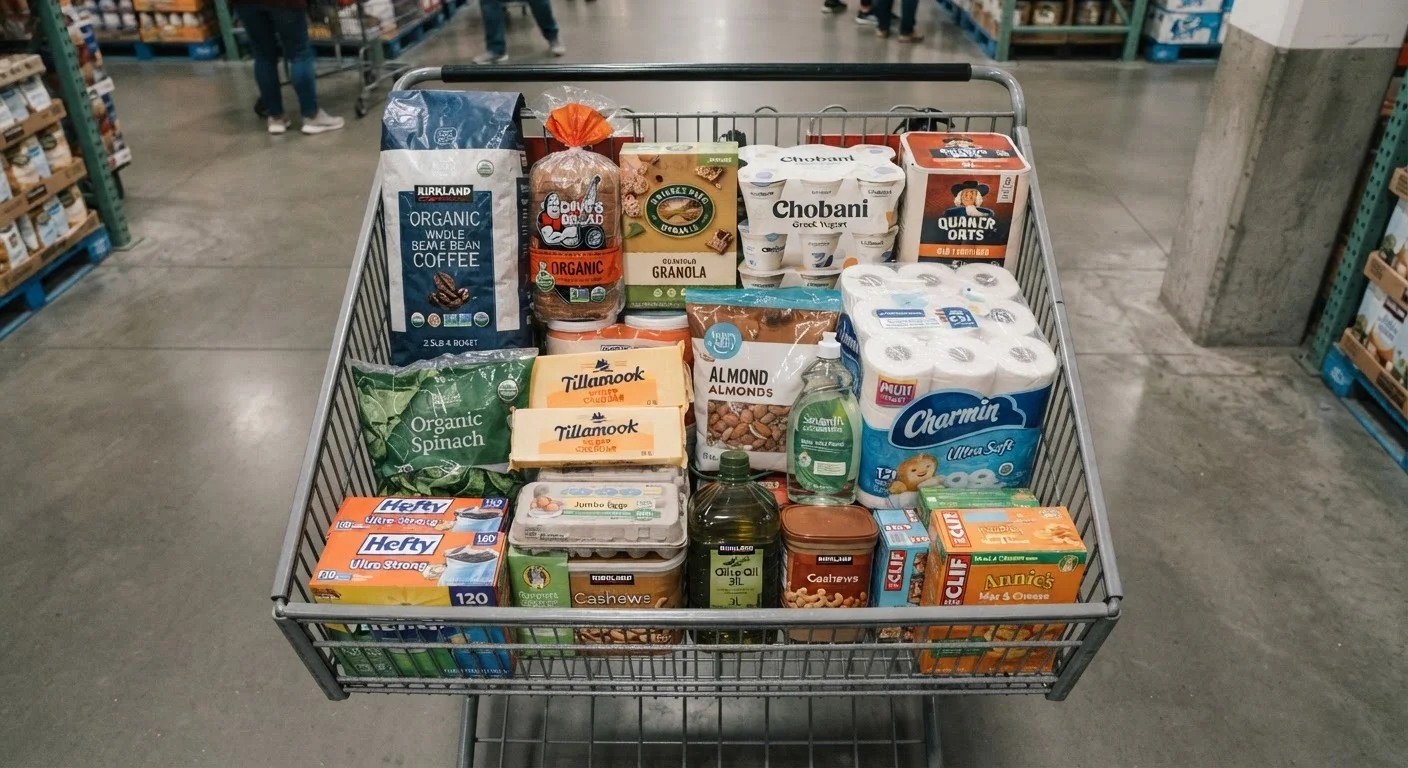
The Appeal of Bulk Buying - and Why It Deserves Scrutiny
The logic behind bulk buying feels airtight: buy more at once, pay less per unit, repeat fewer times. Warehouse-style retailers have built enormous businesses on this premise, and for certain households and certain products, it holds up. The problem is that the conditions required for bulk buying to actually save money are more specific than the general appeal suggests.
Most people evaluate a bulk purchase by looking at the total price and comparing it loosely to what they'd pay for a smaller package. That single-metric approach misses several variables that determine whether the deal is genuinely advantageous. Understanding those variables is more useful than either enthusiastically buying in bulk or avoiding it on principle.
For a sharper look at the pricing metrics that actually matter, see unit price vs. total price vs. cost per use - it breaks down which number to focus on and when.
The Real Advantages of Buying in Bulk
There are legitimate, well-established reasons to buy in larger quantities - but they cluster around a specific category of products and household circumstances.
Lower cost per unit on high-use staples
Bulk packages almost always carry a lower per-unit price on items like paper products, canned goods, and cleaning supplies. For households that go through these reliably, that margin adds up over time.
Fewer shopping trips save time and impulse spending
Buying large quantities less often means fewer visits to the store - which also reduces exposure to in-store promotions and unplanned purchases that erode budgets.
Protection against short-term price increases
Stocking up on stable-price items can act as a mild hedge when prices for everyday goods rise, since you've locked in the earlier price on your existing supply.
Reduced packaging relative to units consumed
Larger formats typically use less packaging material per unit, which can modestly reduce household waste for environmentally conscious shoppers.
The strongest case for bulk buying applies to non-perishable, frequently used staples: toilet paper, laundry detergent, bottled water, canned goods with a long shelf life, and similar items. These products don't expire on a short timeline, their quality doesn't degrade in storage, and most households use them at a predictable, steady rate.
Where the Maths Often Breaks Down
The disadvantages of bulk buying aren't always obvious at the point of purchase - they tend to emerge over time, which makes them easy to overlook when you're standing in the aisle comparing package sizes.
Perishables expire before you use them
Food with a limited shelf life is the most common bulk-buying trap. A bulk purchase that spoils before it's consumed costs more per usable unit than a small package would have.
Upfront cash outlay strains monthly budgets
Even when the per-unit maths are favourable, a large lump-sum purchase can create short-term cash flow pressure - particularly for households operating close to their monthly limits.
Storage space has a real, often overlooked cost
Bulk goods require physical space. In smaller homes or apartments, that space is genuinely limited, and dedicating it to stockpiled goods has trade-offs that rarely appear in the per-unit calculation.
Overconsumption cancels out the savings
Research in consumer behaviour consistently shows that larger quantities on hand increase the rate at which people use a product. If you go through a bulk supply faster than normal, the savings projection was never accurate.
Quality or preferences may change before you finish
Buying 48 units of a product you later decide you dislike, or that gets reformulated, leaves you stuck with a sunk cost. This is especially common with food, personal care, and cleaning products.
When Unit Price Comparisons Can Mislead
A lower unit price only translates to real savings if you use the entire quantity before it expires or becomes unwanted. The calculation also assumes consistent pricing in regular-size formats - promotional sales on smaller packages can sometimes undercut bulk pricing entirely. Always check the unit price shelf label on both formats side by side, and factor in whether a current sale applies.
One underappreciated factor is the behavioural shift that comes with abundance. Having a large quantity of something on hand often changes how freely people use it. That dynamic means the assumed usage rate built into your savings calculation may not reflect actual consumption once the bulk supply is open.
This connects to a broader pattern explored in common deal-finding myths that actually cost you more - many purchasing shortcuts that feel financially smart have subtle costs embedded in how we actually behave after the purchase.
A Practical Framework for Deciding
Rather than treating bulk buying as universally good or bad, it helps to run a quick mental checklist before committing to a large purchase.
~30%
Average household food waste in the US
The USDA estimates that roughly 30-40% of the US food supply is wasted, much of it at the household level - a pattern that bulk food purchases can worsen.
Unit price
The metric that reveals real bulk value
Consumer advocates consistently identify unit-price comparison as the single most reliable method for evaluating whether a bulk deal is genuinely cheaper.
- Check the unit price on both formats. Don't assume bulk is cheaper - compare the shelf unit-price labels directly. A sale on a standard size can easily flip the comparison.
- Assess your actual consumption rate. How long would the bulk quantity realistically last at your household's normal pace? If the answer is measured in years rather than months, reconsider.
- Account for storage constraints honestly. Bulk goods need somewhere to go. If they'll crowd out other things or live in a damp garage, factor that in.
- Consider the product's stability. Does it expire? Can it be frozen? Is there any chance you'll stop using it before it runs out?
- Think about upfront cash flow. A larger spend now that saves money over six months is a good deal - unless it creates a meaningful short-term budget gap.
Applying this kind of structured thinking to everyday purchases is part of becoming a more intentional consumer. The shopping tips hub covers related strategies for making purchasing decisions that hold up beyond the checkout counter. For broader saving habits, the saving money hub offers practical approaches to keeping more of what you earn.
It's also worth noting that bulk buying is just one version of a broader pattern - spending more upfront in the belief that it pays off over time. Overspending on quality follows similar logic and carries many of the same cognitive traps.