
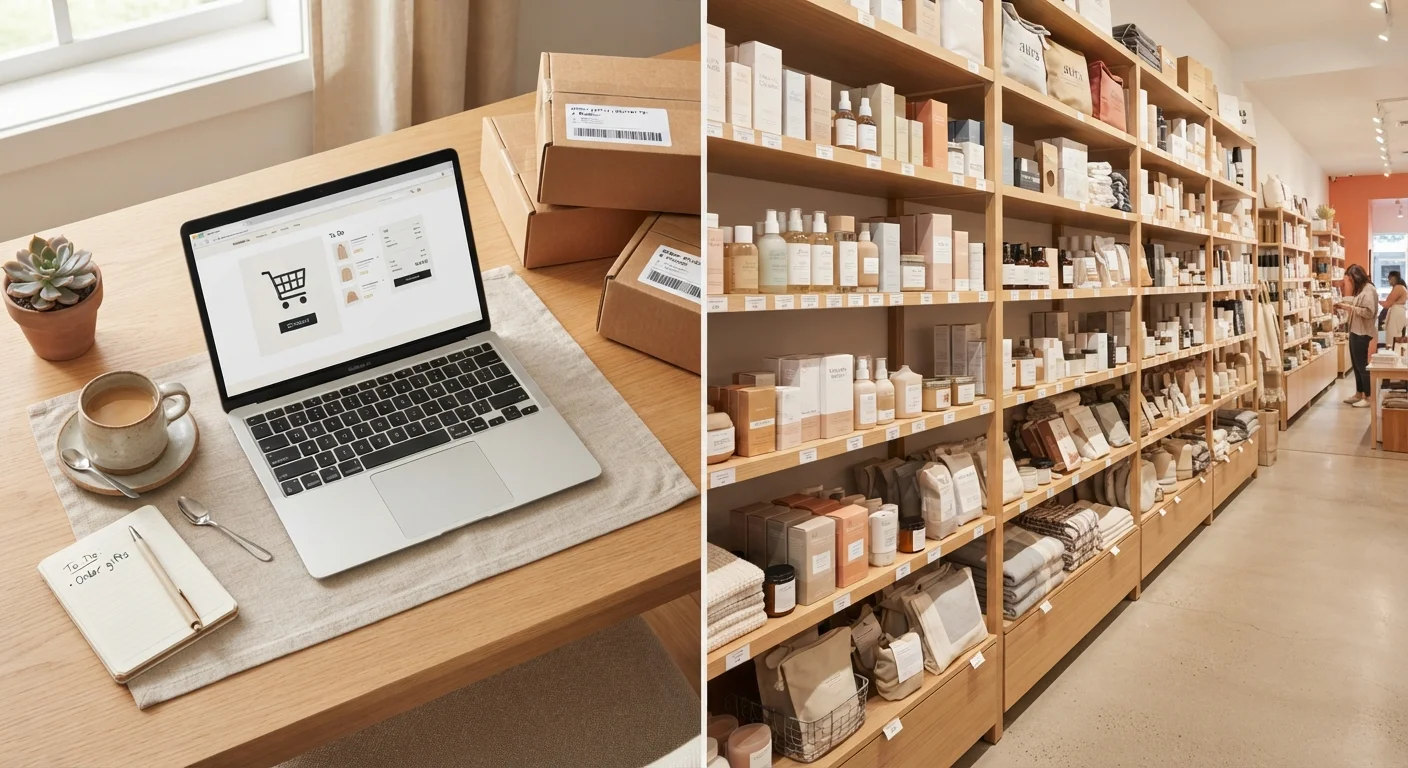
Why Neither Format Is Universally Better
The question isn't really online or in-store - it's which format fits this particular purchase. Consumer habits have shifted dramatically, but that doesn't mean one channel has made the other obsolete. Both serve distinct needs, and understanding those distinctions helps you shop with more intention and fewer regrets.
Before any significant purchase, it's worth slowing down regardless of where you're buying. The questions in our pre-purchase decision checklist apply equally whether your cart is digital or physical.
| Criterion | Online Shopping | In-Store Shopping |
|---|---|---|
| Product selection | Vast - global inventory available | Limited to local stock |
| Price comparison | Easy - multiple tabs, tools | Requires visiting multiple stores |
| Sensory evaluation | Not possible before purchase | Touch, try, and assess in person |
| Immediacy | Delayed - shipping required | Take it home the same day |
| Returns | Often involves shipping labels, waits | Typically faster at service desk |
| Impulse spending risk | Higher - recommendations, one-click | Lower with a fixed list |
| Customer assistance | Chat or email; variable quality | Face-to-face, immediate help |
Where Online Shopping Has a Genuine Edge
Online shopping's strongest advantage is selection and price transparency. In a matter of minutes, you can compare prices across multiple retailers, read hundreds of reviews, and find product variants that simply aren't stocked locally. For researched, non-urgent purchases - electronics, books, household goods - this is a meaningful advantage.
Convenience is real but often overstated. Delivery windows, return shipping, and the wait itself are friction points that in-store shopping doesn't have. Where convenience truly shines is in repeat purchases of familiar products, subscription items, and anything you've already vetted and don't need to evaluate again.
One area where online shopping quietly costs more than expected: impulse spending driven by personalized recommendations, flash notifications, and one-click checkout. The same ease that speeds up a planned purchase also removes the natural pause that slows an unplanned one. Understanding why impulse purchases happen can help you keep that friction working in your favor.
~22%
US retail sales made online
According to the U.S. Census Bureau, e-commerce accounted for roughly 22% of total retail sales in recent quarterly estimates, meaning in-store still dominates overall volume.
16-30%
Online return rate estimates
Industry estimates suggest online purchases are returned at a notably higher rate than in-store purchases, often cited in the 16-30% range depending on category.
Over 50%
Shoppers research online before buying in-store
Consumer research consistently shows that more than half of in-store purchases are preceded by online research - a pattern known as ROPO (Research Online, Purchase Offline).
Where In-Store Shopping Still Wins
Physical retail has one irreplaceable advantage: sensory evaluation. You can assess the weight of a tool, the finish of a piece of furniture, the true color of a garment under normal light, or whether a shoe actually fits your foot - none of which a product photo reliably communicates. For categories where fit, feel, or aesthetic accuracy matters, the try-before-you-buy model prevents the cycle of purchasing, returning, and repurchasing.
In-store shopping also wins on immediacy. If you need something today - for a dinner party, a last-minute gift, a broken appliance - walking out with the item eliminates every variable that shipping introduces. And for many people, returns are also smoother: walking an item back to a service desk is often faster than printing labels and dropping off packages.
There's also a budgeting argument for the physical experience: a deliberate trip with a fixed list tends to generate less unplanned spending than open-ended online browsing. That said, in-store environments are also carefully designed to encourage larger baskets - so the advantage only holds if you shop with a plan. It's also worth questioning whether apparent deals in either channel are genuinely saving you money. Our explainer on common shopping myths is a useful reality check.
Bulk Buying: A Format-Neutral Caution
Whether you're adding a bulk pack to an online cart or loading up a warehouse club cart in person, the economics of buying in quantity deserve scrutiny. Bulk purchases can save money per unit - but only if you actually use everything before it expires or goes to waste. Our piece on when bulk buying works in your favor breaks down the math honestly.
The Smartest Approach: Match Format to Purchase Type
Experienced shoppers often use both channels together rather than treating them as competing options. A common pattern: research online to identify the right product and price range, then go in-store to evaluate it physically before committing. Alternatively, test a product in a showroom to confirm it meets your needs, then check whether a better price is available through other channels - keeping in mind that factors like return policy, warranty, and availability matter alongside sticker price.
Before locking in any purchase through either channel, it pays to evaluate the actual value of what you're buying - especially when an offer seems unusually attractive. The framework in our guide to evaluating any offer helps you strip away marketing signals and focus on what actually matters. Being a smarter shopper isn't about always choosing the cheapest option or the most convenient one - it's about matching the tool to the job.