
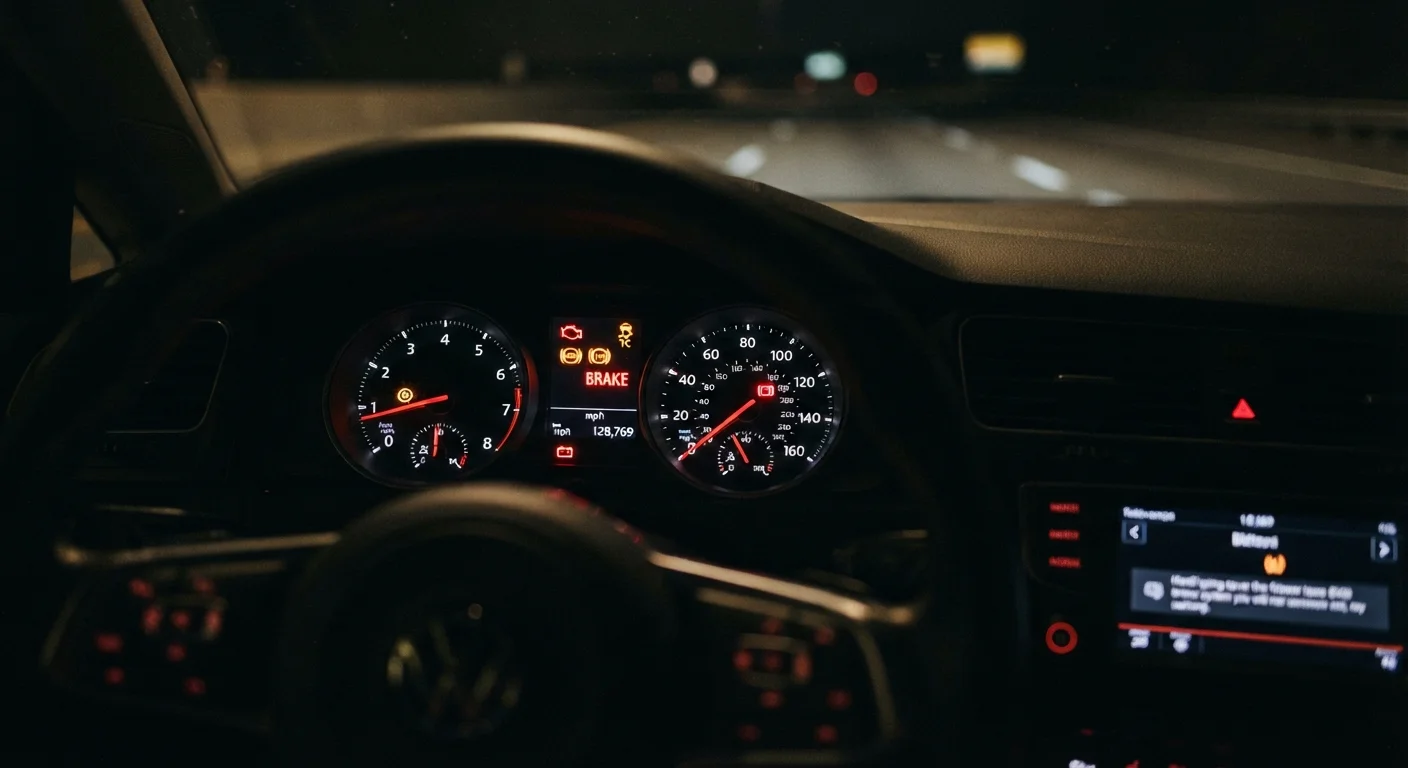
Why Warning Lights Exist and What They're Not
Your vehicle's onboard diagnostic system monitors dozens of sensors simultaneously, and dashboard warning lights are how it alerts you when something falls outside expected parameters. They are not optional suggestions - they're the car's way of flagging an issue before it becomes a breakdown or a safety hazard.
What they aren't is a precise diagnosis. A lit warning light tells you which system is affected, not exactly what part has failed. That distinction matters because the same light can be triggered by anything from a loose gas cap to a failing sensor to a genuinely serious mechanical problem. Understanding the general meaning of each light helps you make a smarter decision about whether to pull over immediately, schedule a service appointment, or simply monitor the situation.
| Color: Red | Stop or act immediately |
| Color: Amber/Yellow | Service needed soon - monitor carefully |
| Color: Green/Blue | Informational - system is active |
| OBD-II Standard | Required on US vehicles since model year 1996 (US EPA / CARB regulatory standard) |
| Most common amber light | Check Engine (MIL) |
| Flashing vs. steady Check Engine | Flashing = pull over; Steady = schedule service |
The Lights You Should Know by Color and Symbol
Warning lights follow a rough color-coding system: red signals stop-now urgency, amber/yellow signals attention-soon, and green or blue are informational. Here are the most common ones and what triggers them.
OBD-II
On-Board Diagnostics II - a standardized system used in most vehicles sold in the US since 1996 that stores diagnostic trouble codes (DTCs) readable by a compatible scan tool.
TPMS
Tire Pressure Monitoring System - sensors that track air pressure in each tire and alert the driver when one or more falls significantly below the recommended level.
Diagnostic Trouble Code (DTC)
A standardized alphanumeric code stored by the OBD-II system that identifies which vehicle system triggered a warning. A scan tool is needed to read these codes.
Charging System
The combination of the alternator, battery, and related wiring that keeps the battery charged while the engine runs. A failure in this system triggers the battery warning light.
Red Lights - Act Immediately
- Engine Temperature (thermometer icon): Coolant is too hot. Pull over safely, turn off the engine, and do not open the hood or radiator cap while the engine is hot. Driving further risks serious engine damage. See our guide to checking coolant levels for what to look for when you've cooled down.
- Oil Pressure (oil can icon): Oil isn't circulating properly. Stop driving. Low oil pressure can destroy an engine within minutes. This is not the same as a low oil level reminder - it indicates a pressure failure.
- Battery (battery icon): The charging system isn't replenishing the battery. Your car may have limited time before it loses power. Reduce electrical loads and head to a mechanic promptly.
- Brake Warning: Could mean the parking brake is engaged, brake fluid is low, or there's a hydraulic system problem. Check the parking brake first; if it's off and the light stays on, treat it as urgent.
Amber Lights - Address Soon
- Check Engine (engine outline icon): This is the most misunderstood light in automotive history. It covers everything from a loose fuel cap to a misfiring cylinder. A steady light means schedule a diagnostic scan soon; a flashing light means pull over and avoid hard acceleration.
- Tire Pressure (TPMS - exclamation point in a horseshoe): One or more tires are significantly under-inflated. Check pressures at the nearest gas station. Driving on low tires affects handling, fuel economy, and tire lifespan.
- Traction Control / Stability Control: If it flashes during acceleration on a slippery road, the system is working as intended. If it stays on, the system may be disabled or faulty.
- Low Fuel: Self-explanatory, but worth noting - consistently running your tank near empty can strain the fuel pump over time.
Your Owner's Manual Is the Authoritative Source
Warning light symbols and their exact meanings can vary by manufacturer and model year. The descriptions in this article reflect common conventions, but your vehicle's owner's manual will have a precise index specific to your car. Keep it in your glove box - it's the most reliable reference you have. If you've lost yours, most automakers offer digital versions through their official websites.
What to Do When a Light Comes On
The instinct to ignore a warning light - especially if the car feels fine - is understandable but risky. Here's a reliable decision framework:
- Note the color and symbol. Red means pull over when safe. Amber means you likely have time but shouldn't procrastinate.
- Check the obvious first. Is the gas cap loose? Is the parking brake on? Sometimes the fix takes ten seconds.
- Consult your owner's manual. Every vehicle's manual has a warning light index specific to that make and model. Generic guides (including this one) describe common patterns - your manual has the final word.
- Get a diagnostic scan. Auto parts retailers often offer free OBD-II code reads. A mechanic can interpret the code in the context of your car's history and symptoms.
- Don't reset the light without fixing the cause. Clearing a code without addressing the underlying issue means the light will return - and you'll have lost valuable diagnostic data.
Before any longer drive, it's worth checking that no lights have come on since your last trip. Our pre-departure checklist covers this and other basics for leaving home prepared.
1 in 10
Cars on the road with an illuminated check engine light
Automotive research organizations have consistently estimated that roughly one in ten vehicles in operation has an active check engine light at any given time.
25%
Fuel economy loss from underinflated tires
The US Department of Energy notes that tire pressure significantly affects fuel economy, with properly inflated tires improving mileage noticeably.