
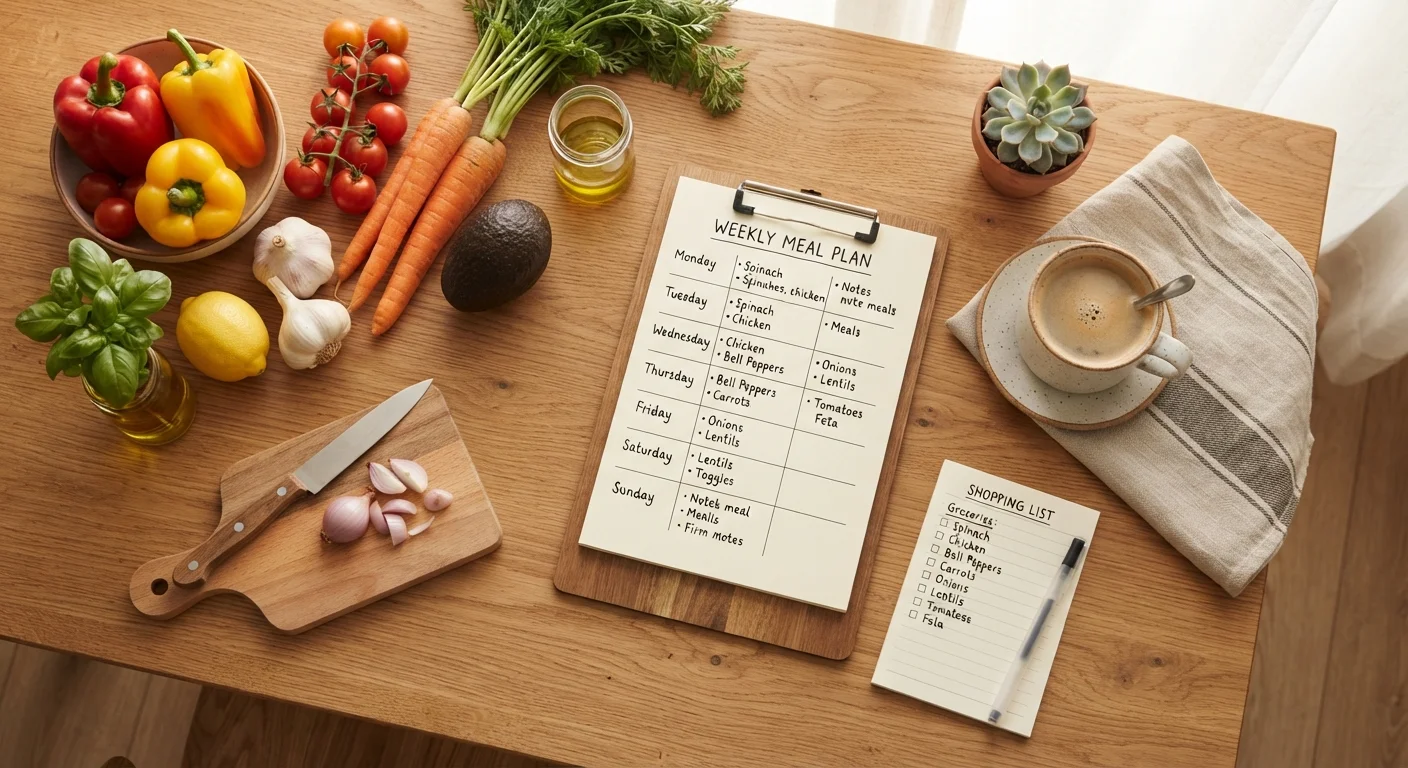
Why a Checklist Makes Meal Planning Stick
Meal planning sounds straightforward until Wednesday rolls around and nothing is thawed, the fridge is a mystery, and takeout wins again. The problem usually isn't motivation - it's missing a reliable process. A structured checklist replaces guesswork with repeatable steps you can complete in under an hour each week.
This checklist covers five stages: auditing what you already have, choosing recipes, building a shopping list, prepping ingredients, and storing food safely. Work through it in order and you'll head into each week with a clear plan and a stocked kitchen. If you want deeper context on building a plan that survives a chaotic schedule, see our flexible meal planning framework for busy weeks.
Pantry & Fridge Audit
Recipe Selection
Shopping List
Prep & Batch Cooking
Storage & Food Safety
Tools That Make the Process Easier
You don't need specialized software to meal plan well, but the right tools reduce friction. Here's what's worth having on hand before you sit down to plan.
Weekly planner template or notebook
Gives you a dedicated space to map meals by day and track what's planned versus what gets made.
Airtight food storage containers
Essential for safe storage of prepped ingredients and batch-cooked meals throughout the week.
Masking tape and a marker (for labeling)
Allows you to date and label containers clearly so nothing gets lost in the back of the fridge.
Digital notes or grocery list app
Keeps your shopping list accessible and editable while you're at the store.
Kitchen scale
Useful for portioning proteins and dry goods accurately when batch cooking for multiple meals.
Once your tools are in place, the planning session itself becomes a consistent weekly ritual rather than a stressful scramble. Our guide on building structured daily routines can help you find a reliable slot in your week to make this happen.
Common Pitfalls to Avoid
Even well-intentioned planners run into predictable problems. Overloading the plan with ambitious recipes on busy nights, ignoring expiration dates during the pantry audit, and skipping the storage step are among the most common reasons plans collapse. For a full breakdown, our article on why meal plans fall apart by Wednesday walks through each failure point with practical fixes.
Don't Overplan Your Busiest Days
Assigning a complex recipe to a night you're consistently rushed is the most reliable way to derail a meal plan. Review your weekly calendar before finalizing any meal assignments. If Thursday evenings are reliably hectic, that night should always feature something that takes 15 minutes or fewer to pull together - or is pre-assembled from Sunday prep.
Watch Your Perishable Quantities
Buying large amounts of fresh produce or proteins you won't realistically cook within three to four days often leads to waste. Be conservative with perishables and supplement with frozen or pantry items for later-week meals. If you're new to planning, start with just three or four planned dinners rather than trying to account for every meal immediately.
Also worth noting: a well-built shopping list is its own skill. Our guide on shopping lists that actually work covers how to structure one that keeps your spending focused and your store trip efficient.
Food Safety Timeframes Are Not Flexible
Cooked proteins, grains, and vegetables should be refrigerated within two hours of cooking and consumed within three to four days, according to general food safety guidance from the USDA. Do not rely on smell alone to determine if food is safe - many harmful bacteria are odorless. When in doubt, discard. Freezing is the safest way to extend the life of batch-cooked food beyond four days.