
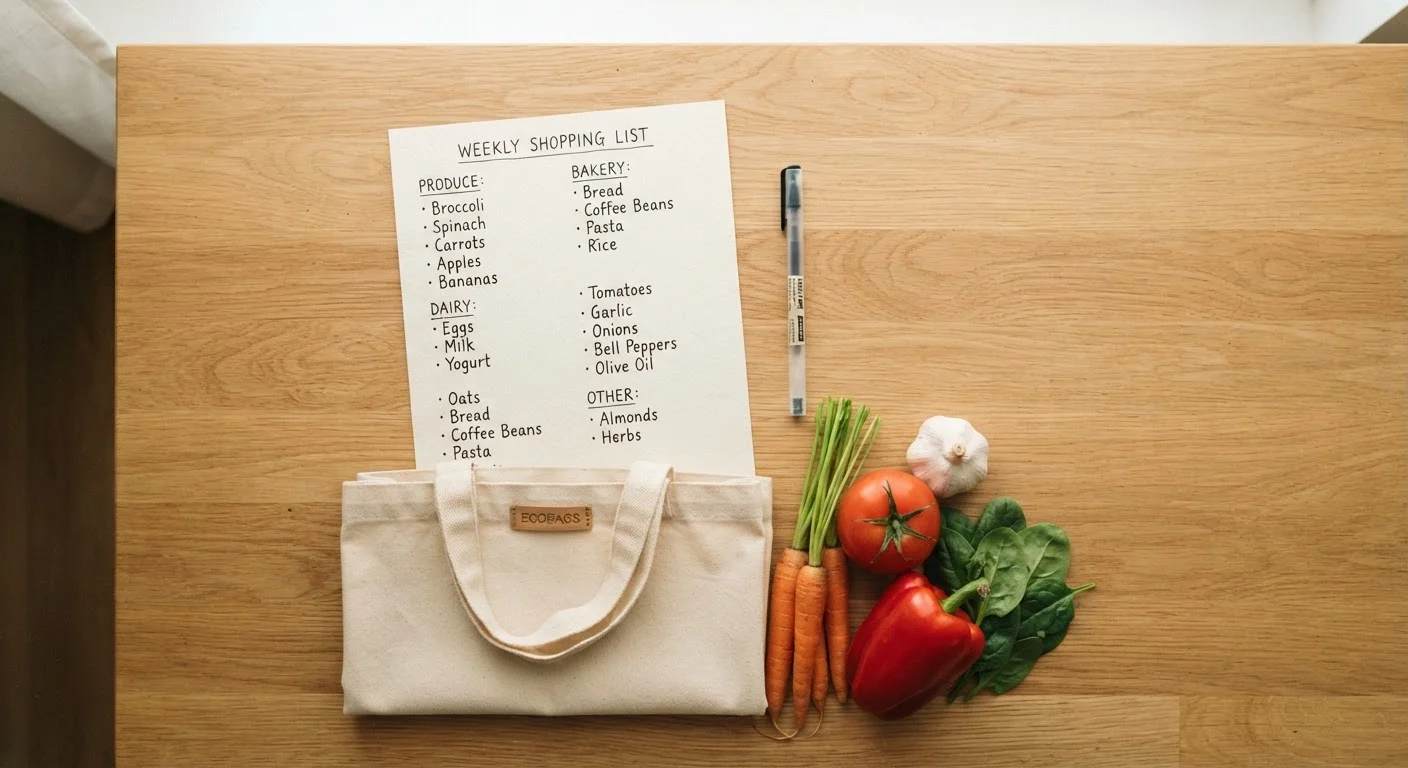
Why Most Shopping Lists Fall Short
A shopping list sounds simple - jot things down, take it to the store, done. But most lists fail at exactly the point they're supposed to help: inside the store, under time pressure, surrounded by products designed to attract attention. The typical list is too vague, unorganized, and written without reference to an actual plan. That combination leaves too many decisions open at the moment when willpower and focus are at their lowest.
The result is familiar: you buy what's on the list plus a fair amount of what isn't, you return home without something you actually needed, and the weekly grocery bill drifts upward without a clear reason. A better-structured list closes those gaps before you walk through the door. It's one of the lowest-effort, highest-return habits available for anyone working on foundational budgeting skills or trying to find practical ways to save money in everyday life.
Recurring Items Save Setup Time
Most households buy a predictable core of 20-30 items every week. Keeping a standing template with these regulars - milk, eggs, bread, coffee, and so on - means you only need to customize around meals and specials. Apps with recurring-item features or a simple printed template both work well for this.
How to Build a Shopping List That Holds
The steps below take the list from a reactive habit - writing down whatever comes to mind - to a proactive system tied to your actual household needs. You'll need about ten to twenty minutes the first time you try this approach; once it becomes a routine, it compresses to five or ten.
What you will need
Notepad or index cards
A physical list you can mark up, annotate, and cross off as you shop.
Grocery list app
Digital apps allow shared lists, category sorting, and carry-over of recurring items.
Weekly meal plan
Drives the list from actual planned meals, eliminating guesswork and overbuying.
Pantry inventory (written or mental)
Prevents buying duplicates of items already on hand.
Do a quick pantry and fridge audit
Before writing a single item, spend three to five minutes checking what you already have. Open the fridge, scan the freezer, and glance at your dry goods. Note anything running low and anything that needs to be used soon. This audit prevents duplicate purchases and can shape your meal choices around ingredients you need to use up.
Anchor the list to your meal plan
A shopping list without a meal plan is little more than guesswork. Map out your meals for the week - even loosely - then extract the ingredients you actually need. This transforms your list from a loose collection of habits into a purposeful document tied to real consumption. See how to build a weekly meal plan for a practical starting framework.
Separate needs from wants before you write
Before committing items to the list, briefly filter them into two categories: genuine needs (out of stock, required for a planned meal) and wants (appealing but not essential). Needs go on the list. Wants can be reviewed against your budget - if room exists, add them deliberately rather than automatically. This small pause is where most unplanned spending starts to shrink. For a deeper framework on this habit, the pre-purchase decision checklist is worth a look.
Organize by store section
Group your items by where they live in the store: produce, dairy, meat, pantry staples, frozen, non-food. The exact categories depend on your regular store's layout, but the principle is the same - a structured list keeps you moving in one direction rather than backtracking. Backtracking increases exposure time to promotions and display items, which research consistently links to higher unplanned spending.
Add quantities and approximate notes
Vague entries like "cheese" or "vegetables" leave decisions open inside the store, where marketing and mood take over. Add specifics: how many, what type, roughly what size. You don't need brand names - just enough detail to make the decision before you're standing in front of a shelf. This specificity also helps you estimate the bill before you shop, which supports staying within budget.
Review and commit before you leave home
Take sixty seconds to read through the completed list. Check for obvious omissions, duplicate items, and anything you've added out of habit rather than need. Once you're satisfied, treat the list as a closed document - items not on it don't go in the cart without a deliberate decision. This final review is the habit that separates a list that saves money from one that just organizes it.
Lists Don't Work If You Ignore Them
A shopping list is only useful if you actually consult it in the store. Many shoppers write a detailed list, then shop from memory and check the list only at checkout. Keep it visible - phone screen on, paper in hand - and cross off items as you go. That active engagement is what keeps the list in control of the trip, not the other way around.
Impulse Spending Starts Before the Store
Most unplanned purchases aren't random - they're the result of entering a store without a clear plan. Understanding the behavioral patterns behind impulse buying can reinforce why the list-building habit matters. The psychology behind impulse buying is a useful complement to the practical steps here.
For households that shop around meals, the weekly meal planning checklist covers the upstream planning that feeds directly into a shopping list like this one. If your schedule is unpredictable, the flexible meal planning framework offers an adaptable approach that still keeps grocery needs clear.