
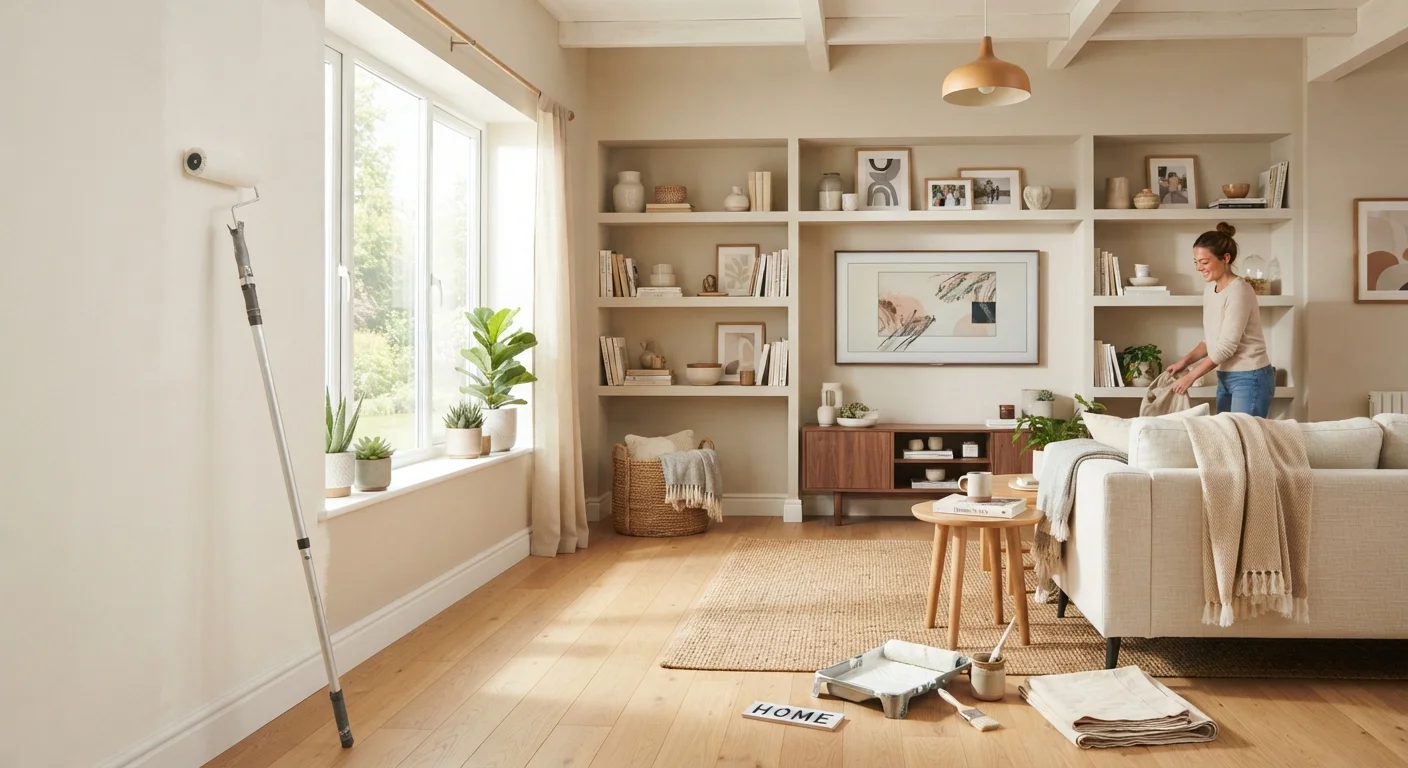
Why Small Changes Matter More Than You Think
Most people delay home improvement because they picture a full renovation - dust, disruption, and a bill that strains the budget. But meaningful change rarely requires a gut remodel. A leaky faucet fixed, a cluttered entryway cleared, a room repainted in a calming colour: each of these shifts how a space feels and functions on a daily basis.
Understanding what home improvement actually means helps clarify this - it covers everything from minor repairs to full structural overhauls, and the smallest category is often where the most accessible gains live. Starting there isn't settling; it's smart sequencing.
Start With What Annoys You Daily
The best first project is often the one that causes a low-grade frustration every single day - a sticky door, poor lighting in a key workspace, or a cluttered surface you walk past constantly. Fixing something that actively bothers you delivers immediate psychological relief and builds motivation to tackle more.
How to Prioritise: Impact, Cost, and Effort
When you're staring at a to-do list that covers three rooms and two seasons, a framework helps. Evaluate each potential improvement across three dimensions:
- Impact: How noticeably will this change how the space looks, feels, or functions?
- Cost: What's the realistic spend - materials, tools, professional labour?
- Effort: How much time, skill, and disruption does it involve?
High-impact, low-cost, low-effort tasks belong at the top of your list. A fresh coat of paint, for example, transforms a room's atmosphere for a relatively modest investment of time and money. Reorganising a pantry takes an afternoon and costs next to nothing but can change how you use your kitchen every single day.
It also helps to distinguish between cosmetic improvements and structural ones. Cosmetic fixes and structural work are fundamentally different in scope, risk, and regulatory requirements - knowing which category your project falls into shapes how you plan and budget it.
Cosmetic improvement
A surface-level change - like painting, replacing fixtures, or updating hardware - that affects appearance without altering the structure or systems of a home.
Structural work
Changes that affect the load-bearing elements, systems (electrical, plumbing, HVAC), or core structure of a building, typically requiring permits and licensed professionals.
Permit
Official approval from a local government authority allowing specific construction or renovation work to proceed - and confirming it meets safety and building codes.
Impact-to-effort ratio
A way of evaluating a project by comparing how noticeable the improvement will be against how much time, money, and skill it requires to complete.
Reversible change
An improvement that can be undone without damaging the property - important for renters or anyone uncertain about a design decision.
The Best Places to Start
Not every room rewards improvement equally. Some spaces - kitchens, bathrooms, entryways, and main living areas - affect daily life most directly and tend to deliver the clearest return on attention and effort. See which rooms tend to reward improvement most for a deeper look at why certain spaces respond better than others.
For beginners, a few categories consistently deliver early wins:
- Lighting: Swapping harsh overhead bulbs for warmer options or adding a lamp to a dim corner changes a room's entire mood.
- Organisation: Clutter undermines even a well-designed space. A room-by-room decluttering approach makes the process manageable without overwhelming you.
- Minor repairs: Squeaky hinges, sticking drawers, cracked caulk - these small annoyances compound over time. Fixing them early prevents bigger issues.
- Paint and surface updates: A single accent wall or freshly painted trim can reset how a room reads without structural changes.
Organisation Counts as Improvement
Home improvement doesn't have to mean tools and materials. Reorganising how a space is used - creating a functional drop zone by the door, clearing counter clutter, or improving storage flow - changes how a home feels and functions. These changes are reversible, cost-effective, and often deliver results faster than any renovation.
Know Your Limits - and When to Call a Pro
Enthusiasm is valuable, but knowing when to step back is equally important. Home improvement becomes a problem when DIY ambition outpaces skill or safety awareness. Electrical systems, gas lines, load-bearing walls, and main plumbing connections are areas where mistakes carry serious risk - to your safety, your home's structure, and your compliance with local building codes.
Many jurisdictions require permits for specific types of work and mandate that licensed tradespeople carry them out. Skipping this step can create complications when selling or insuring your home. Before starting any project beyond basic cosmetic work, verify local requirements and honestly assess your skill level.
If you're renting, there's an additional layer to consider. Home improvement decisions look different for renters than owners - and some changes that seem harmless can affect your lease or deposit.
Don't Skip Permits on Regulated Work
Work involving electrical panels, gas appliances, structural elements, or new plumbing connections typically requires a permit and a licensed contractor in most US jurisdictions. Unpermitted work can create serious liability issues when selling or insuring your home. Always check with your local building department before starting anything beyond basic cosmetic tasks.
Building Momentum: From One Fix to a Better Home
The psychology of home improvement is worth acknowledging: completing one project makes the next one feel achievable. Start with something visible and manageable - a clean, organised bathroom cabinet or a freshly painted hallway - and use that sense of progress as fuel.
Track what you've done and what's next. A simple list, even a handwritten one, helps you see improvement as a process rather than an overwhelming state of incompletion. Before jumping into bigger projects, reviewing a home improvement planning checklist can help you avoid common missteps around budgeting, timelines, and safety prep.
Your home doesn't need to be perfect to feel significantly better. It just needs consistent, thoughtful attention - one small change at a time.
Home Improvement Planning Checklist
A structured pre-project checklist covering budgeting, permits, safety considerations, and timeline planning - useful before starting any improvement beyond basic cosmetic work.
Room-by-Room Decluttering Guide
A practical walkthrough for decluttering each room in your home systematically, helping you create an organised foundation before investing in improvements.
Home Organization Hub
Explore a collection of strategies for decluttering, organising, and maintaining your living spaces - a useful complement to any home improvement plan.