
Why Tyre Health Deserves Routine Attention
Tyres are the only part of your vehicle in constant contact with the road. Their condition directly affects braking distance, handling, fuel efficiency, and blowout risk - yet many drivers check them only when something looks obviously wrong. A consistent monitoring routine doesn't require mechanical skill; it requires just a few minutes and a basic gauge.
This checklist covers the three core maintenance tasks every driver should practise: pressure checks, tread depth inspection, and rotation scheduling. If you're just getting started with car upkeep, this pairs well with the broader beginner's guide to car maintenance, which walks through fluids, filters, and building a service routine from scratch.
TPMS Is a Warning System, Not a Substitute for Checks
Most vehicles built after 2008 include a Tyre Pressure Monitoring System (TPMS) that illuminates a dashboard light when pressure drops significantly - typically 25% below recommended. However, TPMS does not alert you to gradual pressure loss, uneven wear, or tread depth issues. Treat the dashboard light as a last resort signal, not a routine monitoring tool. Manual checks remain essential.
What You'll Need
Before you run through the checklist, gather the right tools. None of them are expensive or hard to find.
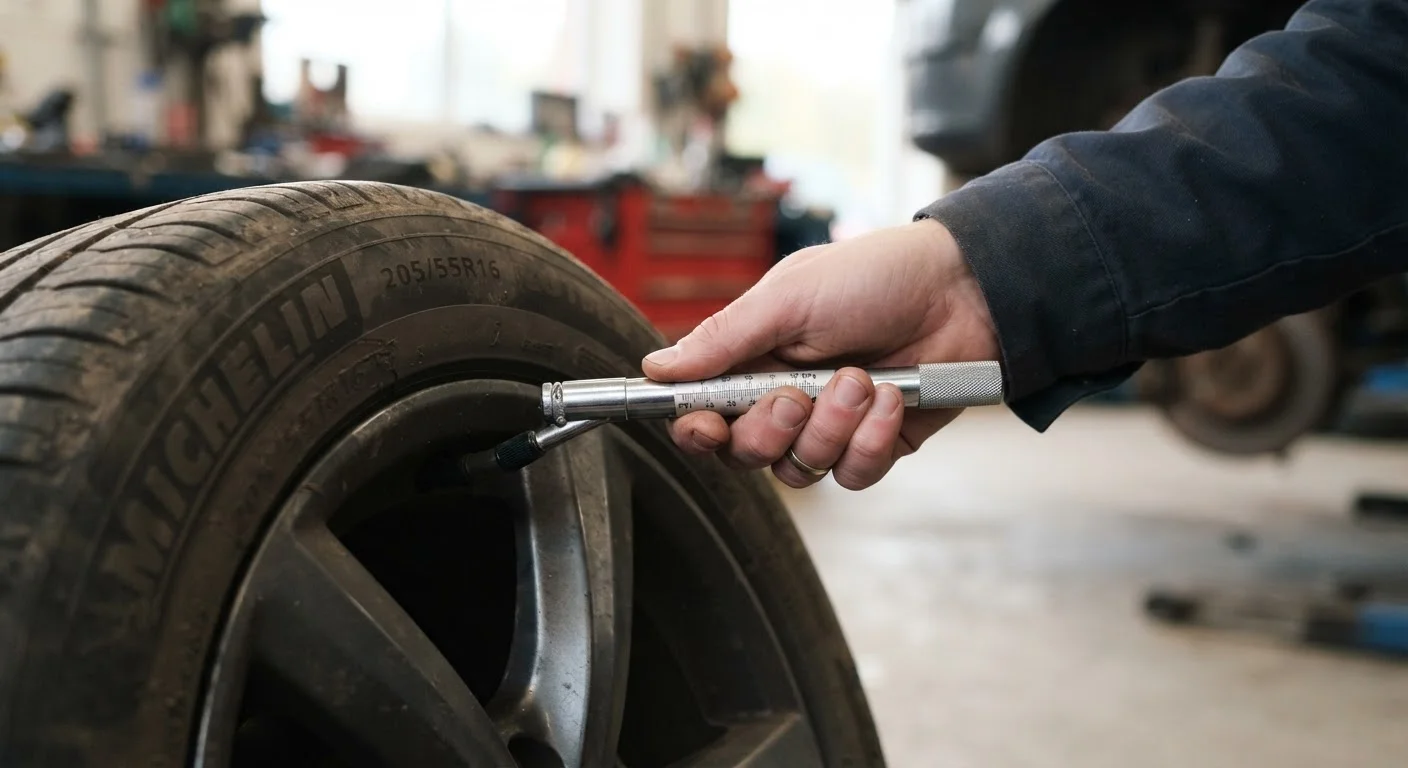
Tyre Pressure Gauge
Measures PSI in each tyre so you can compare it against the vehicle manufacturer's recommendation.
Tread Depth Gauge
Gives a precise millimetre or 32nds-of-an-inch reading of remaining tread - more accurate than the penny test alone.
Portable Tyre Inflator or Air Compressor
Allows you to top up under-inflated tyres at home rather than driving to a service station.
Penny (Lincoln-head coin)
Used for the quick tread depth test - a free, widely known method for spotting dangerously worn tread.
Vehicle Owner's Manual
Contains the manufacturer's recommended tyre pressure, rotation intervals, and rotation pattern for your specific model.
Your vehicle's recommended tyre pressure - expressed in PSI (pounds per square inch) - is printed on a sticker inside the driver's door jamb or in the owner's manual. Do not rely on the maximum pressure moulded into the tyre sidewall; that is the tyre's limit, not the manufacturer's recommendation for your car.
The Ongoing Tyre Checklist
Work through these items on the schedule indicated. Monthly checks take around five minutes per tyre; a full rotation assessment depends on whether you do it yourself or drop the car at a shop.
Monthly Pressure Checks
Tread Depth Inspection
Visual Walkaround
Rotation Schedule
Don't Check Pressure After a Long Drive
Tyres heat up during driving, which causes the air inside to expand and temporarily raises the PSI reading. If you check and adjust pressure on hot tyres, you may end up under-inflating them once they cool. Always let the car sit for at least three hours, or check first thing in the morning before the vehicle is driven.
Reading Wear Patterns - What They're Telling You
Tread wear is rarely perfectly even, and the pattern of wear is diagnostic. Centre wear (the middle of the tread wears faster than the edges) typically signals chronic over-inflation. Edge wear (both shoulders worn more than the centre) points to persistent under-inflation. One-sided wear - where one shoulder is noticeably more worn - usually indicates an alignment or suspension issue rather than a pressure problem.
If you notice any of these patterns, correcting the pressure alone won't solve the root cause. Have a qualified mechanic check alignment and suspension before the uneven wear migrates to your next set of tyres. Neglecting these signals is one of the habits covered in why small maintenance skips snowball into bigger problems.
Cupping or scalloping - a wavy, dipped pattern around the circumference - often points to worn shock absorbers rather than tyre pressure issues.
When to Call in a Professional
This checklist covers what drivers can reasonably monitor themselves. Some situations warrant a professional inspection rather than a DIY fix:
- Tread depth at or below 2/32 inch on any tyre - replacement is needed
- Any visible bulge, sidewall cracking, or object embedded in the tread
- A tyre that repeatedly loses pressure between checks (slow leak or faulty valve stem)
- Persistent vibration or pulling to one side while driving
- Tyres older than six years, even if tread depth looks adequate - rubber degrades over time regardless of use
Before any extended drive, it's also worth running through a pre-departure vehicle checklist that covers tyre condition alongside documents, safety gear, and other essentials. Pair tyre monitoring with regular fluid checks - a guide to vehicle fluids explains what each one does and how to read the levels safely.
This article is for general informational purposes only. Always consult a qualified mechanic for vehicle-specific advice, and verify local legal requirements for tyre safety standards in your state.