
What Meal Planning Actually Is
Meal planning is the practice of deciding - ahead of time - what you're going to eat over a set period, typically a week. That's it. It isn't a diet, a rigid schedule, or a commitment to eating the same lunch every day. It's a decision-making tool that moves food choices from rushed weeknight moments to a calmer, intentional session earlier in the week.
At its most basic, a meal plan is a simple list: Monday, pasta with vegetables. Tuesday, sheet-pan chicken. Wednesday, leftovers. That modest structure is enough to reduce the daily scramble of figuring out dinner, prevent the impulse grocery run that adds $30 to your bill, and cut down on the wilted produce you throw out each week.
Meal planning exists on a spectrum. Some households plan every meal - breakfast, lunch, and dinner - with precise recipes. Others plan only dinners and keep other meals flexible. Both approaches work. The goal is to find a level of structure that makes your daily eating easier, not more complicated. If you're exploring broader improvements to how you eat, the Healthy Eating hub is a useful complement to this guide.
Meal plan
A written schedule of meals you intend to eat over a set period, typically a week, used to guide shopping and reduce daily food decisions.
Pantry audit
A quick inventory of what food you already have at home - fridge, freezer, and cupboards - done before writing a grocery list.
Batch cooking
Preparing larger quantities of a food item in one session so it can be used across multiple meals throughout the week.
Flex night
An intentionally unplanned evening in your meal schedule, reserved for leftovers, a simple pantry meal, or takeout without guilt.
Recipe rotation
A curated shortlist of familiar, reliable meals that you cycle through regularly rather than cooking new recipes every week.
Batch components
Versatile ingredients prepared in bulk - like roasted vegetables or cooked grains - that can be mixed and matched across different meals.
Why It's Worth Building the Habit
The case for meal planning isn't about willpower or nutrition ideals - it's largely about reducing friction. When there's no plan, every evening becomes a small negotiation: What do we have? What can I make quickly? Should I just order something? That low-grade daily stress accumulates. A plan eliminates most of it.
The practical benefits compound quickly:
- Less food waste: You buy what you need and use what you buy. The USDA estimates that a significant share of household food is discarded - planning directly addresses this.
- Lower grocery spending: Shopping from a list is consistently more cost-effective than shopping by mood. For more on connecting food spending to your broader budget, see the Budgeting Basics hub.
- Better consistency with nutrition goals: When meals are pre-decided, you're less likely to make choices you later regret.
- Time savings: Batch-prepping two or three components on a prep day saves significant cooking time across the week.
Meal planning is also one of the more tractable healthy habits to build from scratch because the feedback loop is fast - you feel the benefit within the first week.
Start With Just Dinners
If the idea of planning every meal feels overwhelming, narrow your focus to dinners only for the first two to three weeks. Once that routine feels natural, you can decide whether adding breakfast or lunch planning adds real value for your household. Small wins build durable habits.
Core Concepts Before You Start
Before writing your first meal plan, a few foundational ideas will save you from restarting several times over.
The Pantry Audit
Before shopping for new ingredients, know what you already have. A quick pantry audit - checking your fridge, freezer, and cupboards - reveals what needs to be used soon and prevents buying duplicates. This single step often cuts your first grocery list significantly.
The Recipe Shortlist
Gather eight to twelve recipes your household reliably enjoys and that you know how to make. Avoid the temptation to plan ambitious new dishes every week. Familiar meals reduce prep time and the risk of a plan failing because a recipe was too complex for a Tuesday night.
Theme Nights
Assigning loose themes to certain nights (e.g., pasta night, grain bowl night, fish Friday) gives you a structural scaffold without locking in specific recipes. It reduces the blank-page problem when sitting down to plan.
Batch Components, Not Just Whole Meals
Rather than prepping five complete dinners, consider cooking versatile components - roasted vegetables, a pot of grains, a protein - that can be combined in different ways. This approach adds variety while keeping prep efficient.
No Special Tools Required
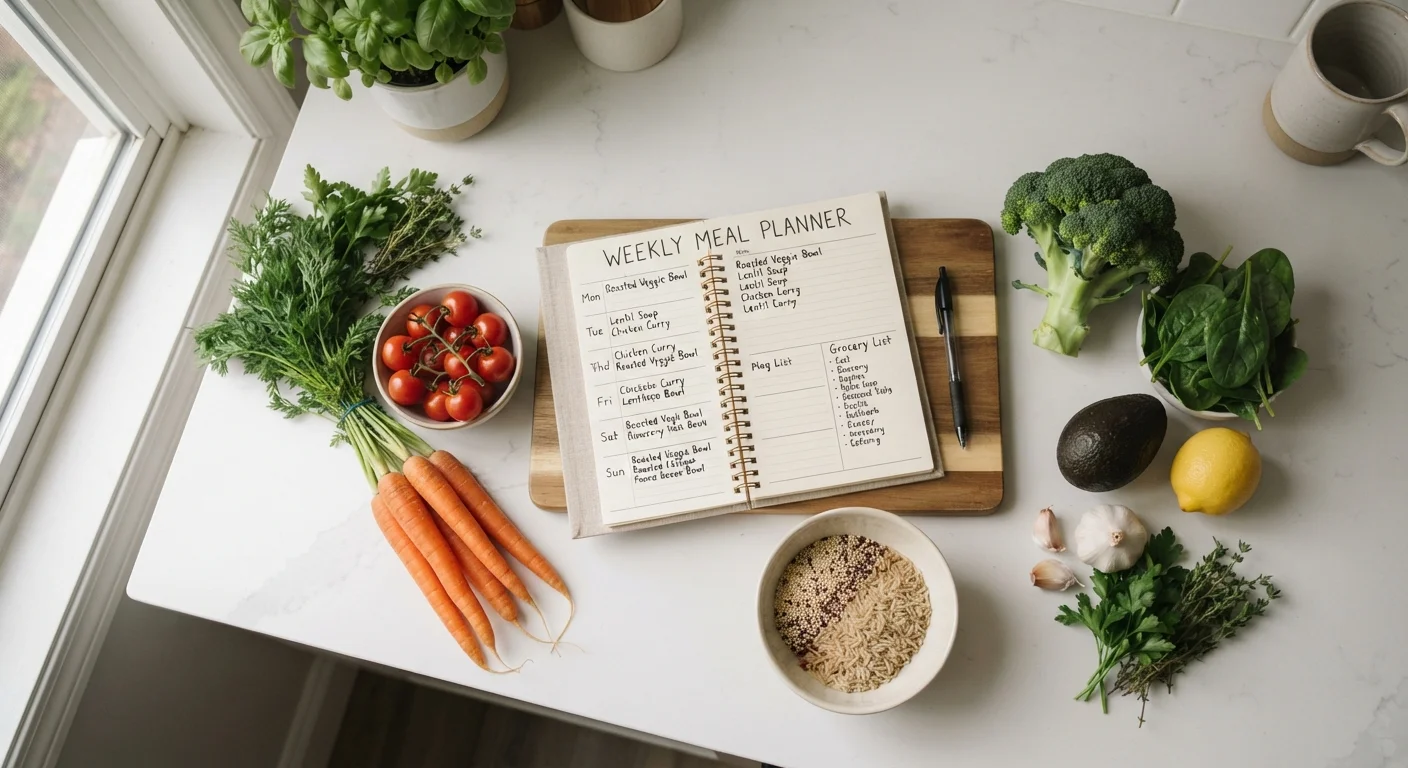
A notebook, pen, and a basic grocery list are all you genuinely need to start meal planning. Digital apps and templates can be helpful once you know what you want from a system, but they're not prerequisites. The habit matters more than the tool you use to maintain it.
Your First Week: A Simple Starting Framework
For your first attempt, plan only dinners - four to five nights maximum. Leave one or two nights as intentional flex nights (leftovers, simple pantry meals, or occasional takeout). This removes the pressure of a perfect week and builds in realistic recovery room.
- Choose your planning session: Pick one consistent time each week - Sunday morning, Friday evening - and treat it as a brief recurring appointment.
- Do a pantry audit: Five minutes checking what's already on hand.
- Select three to five meals from your recipe shortlist that fit your week's schedule. If Thursday is always hectic, plan something that takes under 20 minutes.
- Build your grocery list from those recipes, minus what you already have.
- Shop once, ideally in a single trip.
That's a complete starting framework. When you're ready to add more structure or adapt it to a busier schedule, the flexible meal planning framework for busy weeks offers the logical next step. You can also use the weekly meal planning checklist to make sure nothing gets missed as your routine matures.
Weekly Meal Planning Checklist
A practical checklist covering every stage of the weekly planning process - from pantry audit to shopping, prep, and storage. Useful once you've completed your first plan and want a reliable reference.
Flexible Meal Planning Framework
A step-by-step approach for adapting your meal plan to unpredictable schedules while keeping nutrition consistent and grocery waste low. The logical next read after this introduction.
Common Beginner Pitfalls to Avoid
Most people who try meal planning and abandon it run into one of a handful of predictable problems. Knowing them in advance gives you a genuine advantage.
Planning Too Much Too Soon
Trying to plan every meal, every day, in week one is the fastest route to burning out on the habit. Begin small, build confidence, then expand. A plan you'll actually use beats a perfect plan you'll abandon.
Ignoring Your Real Schedule
A plan built around imaginary free time doesn't survive contact with reality. Look at your actual calendar before choosing recipes. Busy nights need simple meals; that's a feature of a good plan, not a failure.
Mistaking Variety for Quality
You don't need a different recipe every night. Repeating a meal mid-week is efficient and normal. Reliable repetition is one of the core mechanics that makes meal planning sustainable over months, not just weeks.
If you find yourself discouraged by common myths - like thinking you need to spend all Sunday cooking - the article on meal planning myths that keep people stuck is worth reading before you give up. And when you're ready to go deeper, building a weekly meal plan you'll actually stick to covers the next level of practical detail.
Avoid Over-Ambitious First Plans
Choosing complex, time-intensive recipes for your first week sets you up for frustration. Reserve new or elaborate meals for weekends or occasions when you have more time. Your first priority is building a repeatable routine - the culinary creativity can come later once the habit is solid.