
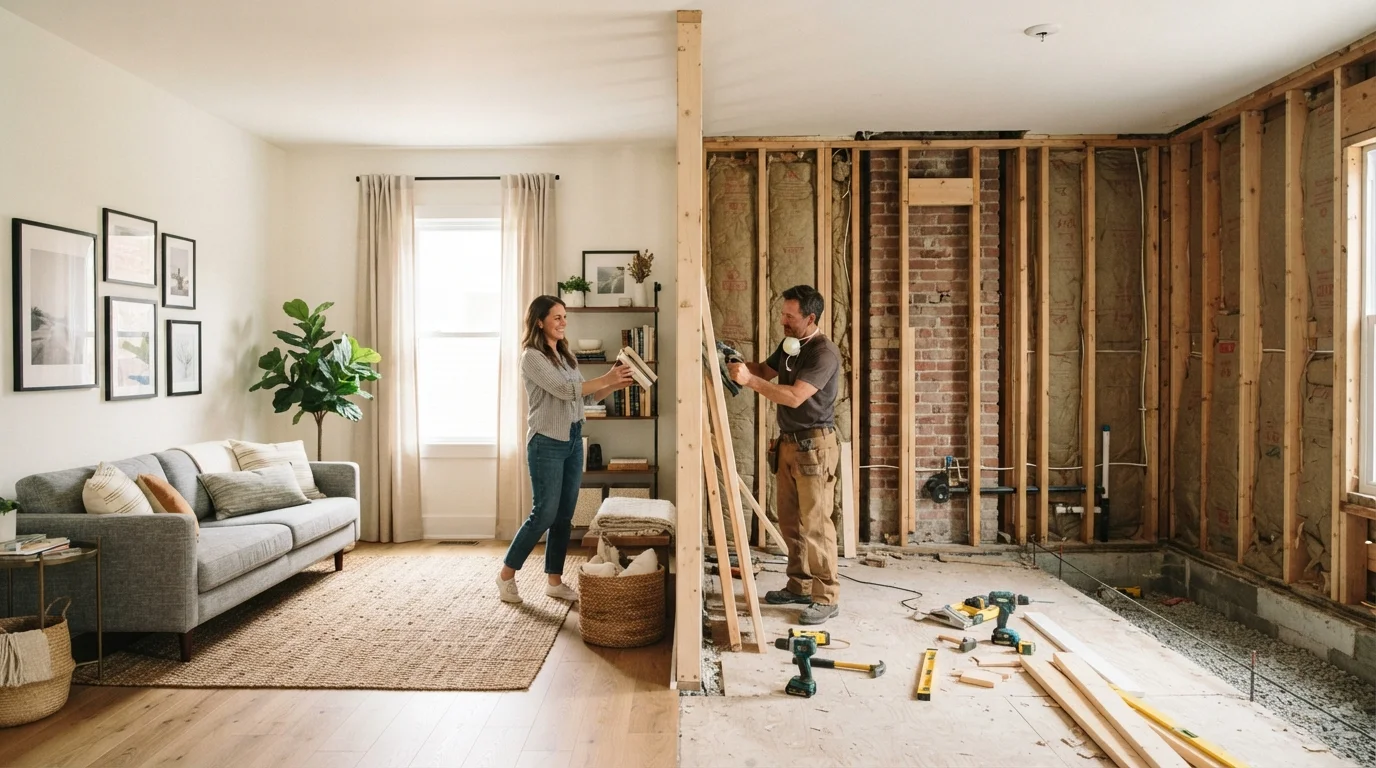
What Counts as a Cosmetic Fix?
Cosmetic improvements are changes that affect how a space looks without altering its function, safety, or underlying structure. Think of them as the finishing layer - the details that make a home feel fresh, personalized, or polished.
Common examples include:
- Painting walls, ceilings, or trim
- Replacing light fixtures or cabinet hardware
- Installing new flooring over an existing subfloor
- Adding backsplash tile
- Swapping out faucets or showerheads
- Hanging shelving or mirrors
These projects tend to be lower in cost, faster to complete, and well within the reach of motivated DIYers. They rarely require permits and don't demand licensed contractors. That said, cosmetic work is most satisfying - and most responsible - when the structure beneath it is already sound. Painting over a cracked wall may look better temporarily, but it doesn't fix what's causing the crack.
For a broader look at what improvement categories encompass, see what home improvement actually means for your living space.
Start With a Honest Assessment
Before planning any project, walk through your home with fresh eyes and note anything that affects function - not just aesthetics. Look for cracks that have grown, doors that no longer close properly, stains that reappear, or floors that flex underfoot. These are signals worth investigating structurally before any cosmetic work begins.
What Qualifies as Structural Work?
Structural work involves any project that touches a home's core systems - the elements that keep it standing, protected from the elements, and functioning safely. These projects go well beneath the surface.
Structural categories typically include:
- Foundation repairs: Addressing cracks, settling, or water intrusion at the base of the home
- Framing and load-bearing walls: Modifying or repairing the framework that holds up floors and roof
- Roofing replacement: Not just shingles, but decking, flashing, and ventilation systems
- Electrical panel upgrades or rewiring: Bringing wiring up to current safety standards
- Plumbing rerouting or replacement: Changing pipe layout or replacing deteriorated pipes within walls
- HVAC system installation or replacement
Most structural projects require permits, inspections, and in many jurisdictions, licensed tradespeople. This is not bureaucratic overhead - it's how communities ensure that the work is done safely and won't become a hazard to future occupants.
Never Remove a Wall Without Checking First
Open-concept renovations are popular, but removing a wall without confirming it's non-load-bearing can cause serious structural damage. A licensed contractor or structural engineer can assess whether a wall carries weight from above. This is not a step to skip or guess at - the consequences can be severe and expensive to correct.
If you're weighing what's worth tackling in your space, certain rooms reward attention more than others depending on what kind of work is needed.
How the Two Compare
Understanding the contrast between these two types of work helps you make smarter decisions about sequencing, budgeting, and when to call a professional.
| Cosmetic Fixes | Structural Work | |
|---|---|---|
| Purpose | Improve appearance and feel | Ensure safety, stability, function |
| Examples | Paint, flooring, fixtures | Foundation, framing, electrical, roofing |
| Typical cost range | Lower to moderate | Moderate to high |
| Permits usually required | Rarely | Frequently |
| Licensed professional needed | Often optional | Typically required |
| DIY-friendly | Often yes | Rarely - safety risk if done incorrectly |
| Impact on home safety | Minimal | Significant |
| Recommended priority | After structural issues are resolved | First, before cosmetic upgrades |
One important nuance: some projects straddle both categories. Replacing windows, for example, may seem cosmetic but often involves flashing, moisture barriers, and structural rough openings. When in doubt, consult a licensed contractor before assuming a project is purely surface-level.
Why the Distinction Matters for Your Budget and Safety
The most common mistake homeowners make is applying cosmetic solutions to structural problems. Fresh drywall compound won't stop a slow foundation shift. New grout won't resolve a leak coming from a failing pipe behind the wall. When cosmetic work masks a structural issue, the underlying problem typically worsens - and the eventual repair becomes more expensive.
~35%
Of home inspection findings involve structural or system issues
Home inspection industry data consistently shows that a significant share of flagged items relate to structural components, roofing, or major systems rather than cosmetic conditions.
2-3x
Cost multiplier when deferred structural repairs worsen
Building professionals commonly note that delaying structural repairs - especially water intrusion or foundation issues - can multiply the eventual repair cost significantly over time.
A useful rule of thumb: always address structural concerns before investing in cosmetic upgrades. A beautifully renovated kitchen loses its appeal quickly if the roof above it begins to fail.
For renters and owners alike, the calculus for structural work differs significantly. Renting vs. owning shapes how improvement decisions get made - especially when structural repairs are the landlord's legal responsibility.
If you're just starting to think about where to focus your energy, prioritizing by impact and cost can help you build a realistic plan that tackles the right things first.
This article is for general informational purposes only. For projects involving electrical, structural, plumbing, or other regulated work, consult a licensed professional and verify local permit requirements before proceeding.