
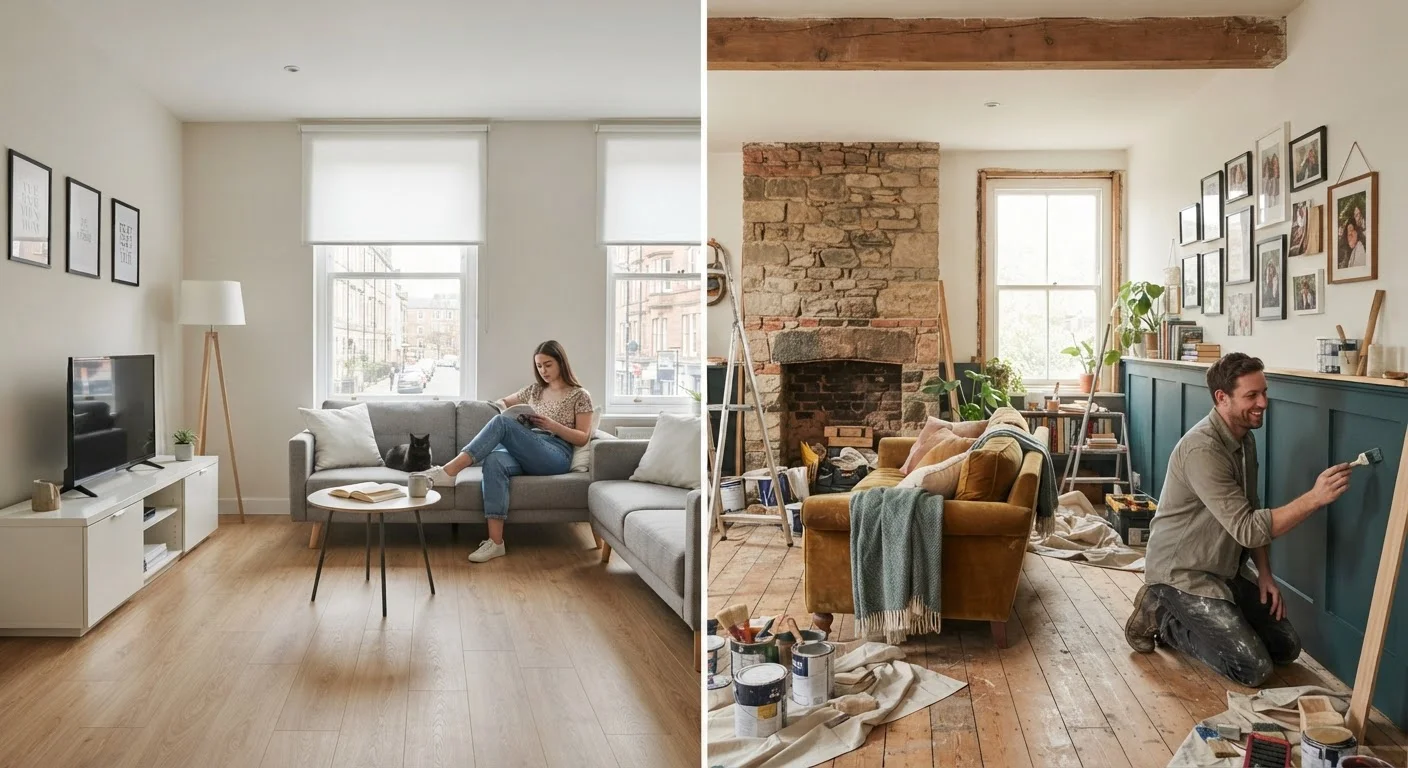
Why Your Ownership Status Changes Everything
Home improvement looks different depending on one fundamental question: do you own the space, or are you borrowing it? That single factor reshapes what's allowed, what's worthwhile, and what you'll get back from your investment. To understand why, it helps to first clarify what home improvement actually covers - see our guide to what home improvement means for your living space for a full breakdown.
For renters, the core constraint is permission. Most leases restrict alterations to the property - sometimes even painting. Any change that can't be reversed before move-out could result in deducted deposits or lease violations. That's not a reason to abandon improvement altogether; it's a reason to think differently about it.
For homeowners, the freedom is broader, but the stakes are higher. Every improvement decision is also a financial one. You're choosing where to spend money on an asset you own - and that means weighing current comfort against long-term return.
| Criterion | Renters | Homeowners |
|---|---|---|
| Permission required | Yes - landlord approval often needed | No - subject to local codes only |
| Structural changes | Generally not permitted | Permitted with proper permits |
| Financial return | None - improvements stay with property | Possible equity and resale value gain |
| Best improvement type | Reversible, removable upgrades | Cosmetic and structural investment |
| Risk level | Deposit loss or lease violation | Financial overextension or code issues |
| Timeline mindset | Short-to-medium term comfort | Long-term value and livability |
What Renters Can Realistically Do
Renters have more options than many realise, as long as they stay within the bounds of reversibility and lease terms. The goal is to improve your experience of the space without altering the property itself in a lasting way.
- Lighting upgrades: Swapping out bulbs for warmer tones or adding plug-in floor and table lamps can dramatically change a room's atmosphere - no wiring required.
- Removable wall treatments: Peel-and-stick wallpaper and removable adhesive hooks have improved significantly in quality. Used carefully, they leave little to no trace on walls.
- Furniture and layout: Rearranging or upgrading your furniture is entirely within your control and can transform how a space functions and feels.
- Organisation systems: Freestanding shelving, under-bed storage, and drawer organisers improve function without touching the property.
- Window coverings: Tension-rod curtains or removable window film can improve privacy and light control without permanent installation.
If you want to go further - say, painting an accent wall or replacing a dated light fixture - put your request in writing to your landlord. Many are open to reasonable improvements, especially if you offer to restore the original finish before leaving. For a prioritised approach to where to begin, see where to start improving your home.
Always Get Landlord Agreements in Writing
Verbal permission from a landlord may not protect you if disputes arise later. If your landlord agrees to let you make a modification - such as painting or installing shelving - document it in a written addendum to your lease. Note what change is permitted, who is responsible for restoration, and any agreed-upon compensation. This protects both parties and prevents misunderstandings at move-out.
What Homeowners Should Weigh Before Starting
Owning your home opens the door to both cosmetic and structural improvements, but more freedom doesn't mean every project is worth doing. Homeowners need to think in two timeframes simultaneously: what improves life now, and what holds or builds value over time.
Understanding the difference between surface-level upgrades and deeper structural work matters here. Our article on cosmetic fixes vs. structural work explains how to tell them apart and why the distinction affects both your budget and your safety.
Some principles that apply broadly:
- Cosmetic first, structural when necessary: Fresh paint, updated hardware, and improved lighting deliver noticeable returns at low cost. Structural work - electrical, plumbing, roofing - should be tackled when needed, not deferred indefinitely.
- Permits matter: Many structural and major cosmetic projects require local permits. Skipping them can create legal issues and complicate future sales. Always verify requirements with your local building authority.
- Licensed professionals for hazardous work: Electrical, gas, and load-bearing structural work should be handled by licensed contractors. DIY attempts in these categories carry serious safety risks.
~35%
US households that rent their homes
According to the U.S. Census Bureau, roughly one in three American households lives in a rented residence, underlining how common the renter's home improvement challenge is.
Top 2
Highest-return renovation areas for owners
Kitchen and bathroom improvements are consistently cited by real estate professionals as among the renovation categories most likely to recoup costs at resale, though outcomes vary by market.
Knowing which rooms to focus on also helps. Explore which rooms tend to reward attention most to channel your energy effectively.
Shared Ground: Improvements That Work in Either Situation
Despite the differences, renters and homeowners share some common ground. Certain types of improvement deliver real gains in comfort and function regardless of ownership status - and they're a smart place to start no matter where you are in life.
Decluttering and purposeful organisation are perhaps the most universally impactful changes. A well-organised space feels better to live in and is easier to clean and maintain. Similarly, improving air quality through better ventilation, houseplants, or air purifiers benefits anyone, as does upgrading soft furnishings like rugs, cushions, and curtains for a more comfortable atmosphere.
Before committing to any project - whether you rent or own - a clear plan saves time, money, and frustration. Our home improvement planning checklist walks through everything worth thinking about before you start.
The best home improvements, in any situation, are the ones that make your daily life meaningfully better - starting with honest constraints and building from there.